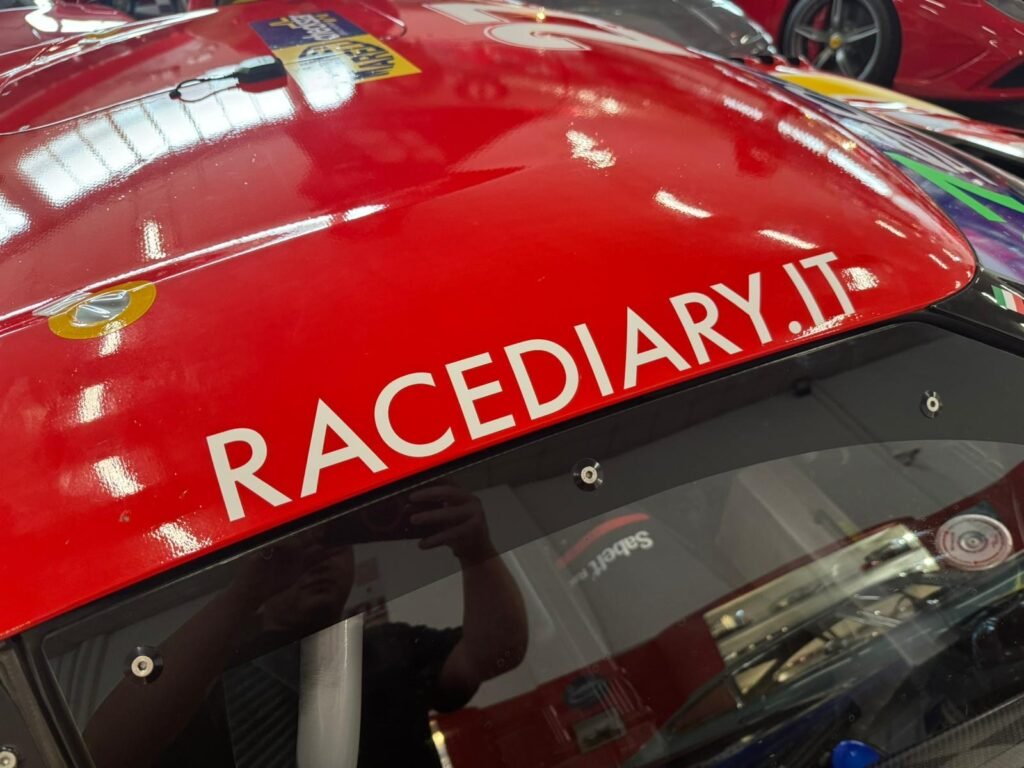

Participating in Formula Student is one of the most valuable opportunities for engineering students. As we’ve explored in previous articles, this competition not only allows students to apply theoretical knowledge, but also serves as an ideal showcase for future career prospects, an experience that can truly make a difference in the job market.
However, behind the allure and prestige of these races lie significant challenges, chief among them the financial one. This is where the complex reality of each team competing in Formula SAE comes into play.
How does a Formula SAE Team work?
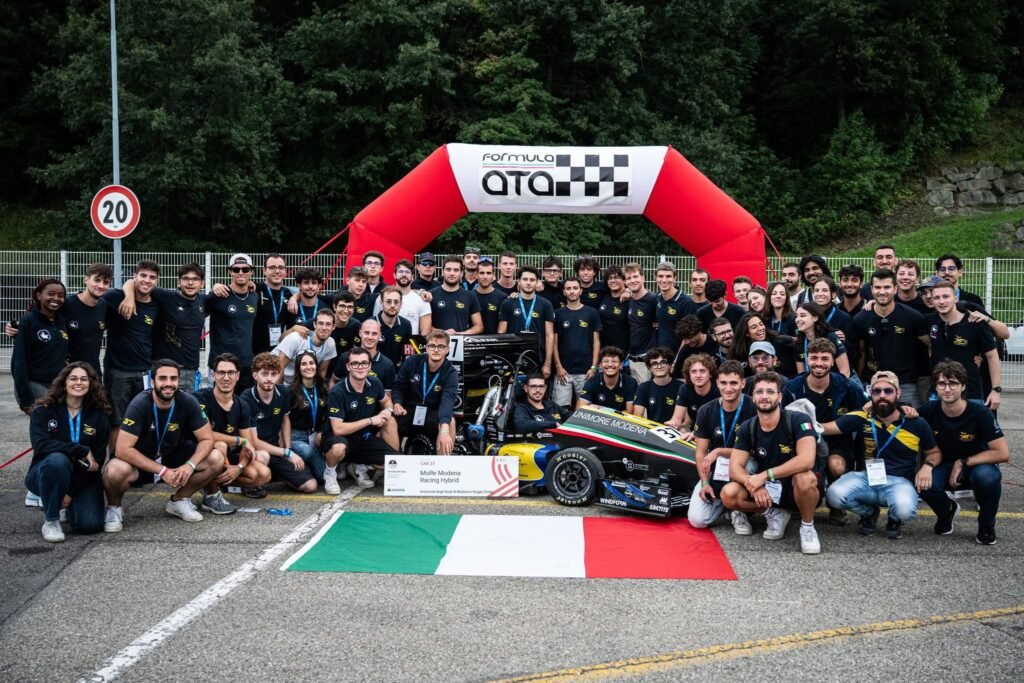
Every Formula Student team shares a common goal: to design, build, and race a car according to strict regulations.
On paper, the concept is straightforward, but the reality is far more complex. Each team tackles the design and construction of the vehicle with limited resources, often carefully rationed and sometimes provided through sponsorships or university partnerships.This makes the competition not only an engineering challenge, but also a true battle for funding.
Formula SAE is not just a proving ground for students’ technical skills; it’s also a showcase for the automotive industry and sponsoring companies. These sponsors are essential to the sustainability of each team: university funding is generally limited, and most resources come from private sponsors.
But sponsorships go beyond financial support. In many cases, companies provide parts, consulting, or logistical assistance, and sometimes even create networking opportunities that prove invaluable for team members.
The economic challenge and the automotive industry crisis
One of the most critical aspects concerns team funding, in particular how some teams are advantaged over others based on the financial resources available to them. This has a direct impact on their ability to compete on equal footing with teams backed by more powerful sponsors, such as German groups, which provide substantial resources.
The economic difficulties facing the automotive industry, the global crisis, and the current phase of stagnation, with slowing innovation in traditional vehicles and a deceleration in electrification progress, are having a significant impact on the resources allocated to competitions like Formula SAE. The challenges faced by car manufacturers during this period are trickling down to universities and to the teams participating in the competition. While some companies continue to be well-funded, others unfortunately are struggling to support investments in advanced research projects, such as electric or autonomous driving.
The future of autonomous driving and Formula SAE
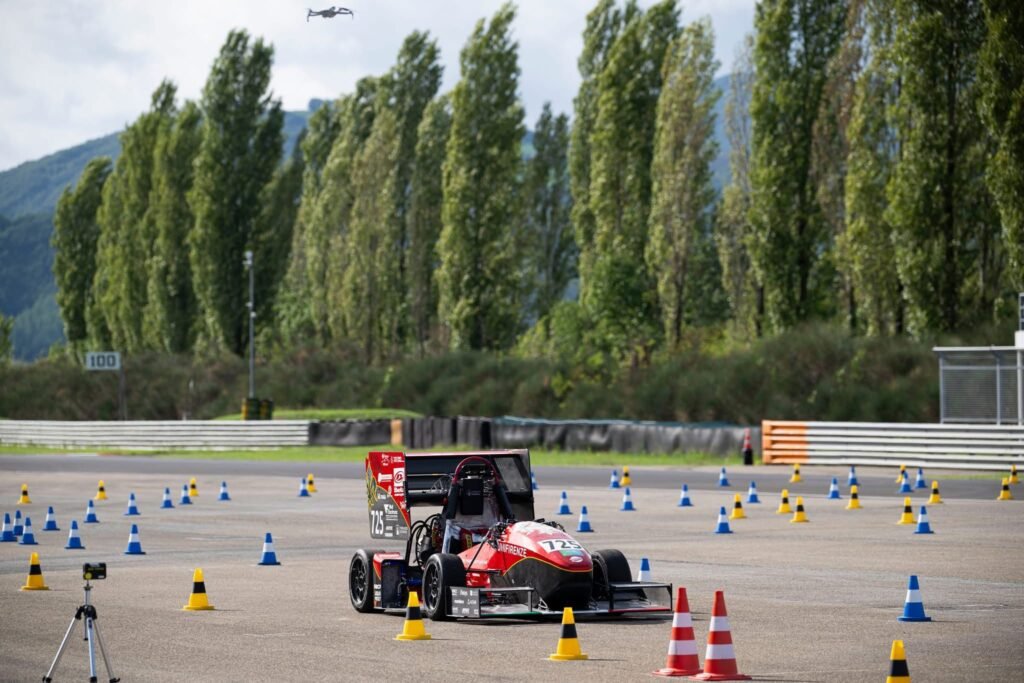
One of the most innovative aspects of Formula SAE competitions is the opportunity to develop “driverless” vehicles, that is, autonomous cars. Although interest in these technologies is growing, only a few teams venture into this field, and in Italy the phenomenon remains marginal. Some Italian universities, including the university of Padua, Florence, Rome (Sapienza), and the Polytechnic University of Turin, have taken steps in this direction by forming driverless teams. However, the number of autonomous vehicles remains limited, and the resources available to develop these projects are significantly lower than those allocated to combustion or hybrid vehicles.
There are multiple reasons for the limited presence of driverless vehicles. On one hand, the timing of the competition, held at the end of the academic season leaves little room for teams that are already focused on the following year’s projects.
On the other hand, autonomous driving is still seen by many as an uncertain field of experimentation, especially due to the current stagnation of the technology. Despite the media attention surrounding events like the Indy Autonomous Challenge and the Abu Dhabi Autonomous Racing League (A2RL), the automotive sector as a whole is facing a crisis of confidence in autonomous driving, an area that continues to struggle to take off.
The impact on the automotive sector and career opportunities
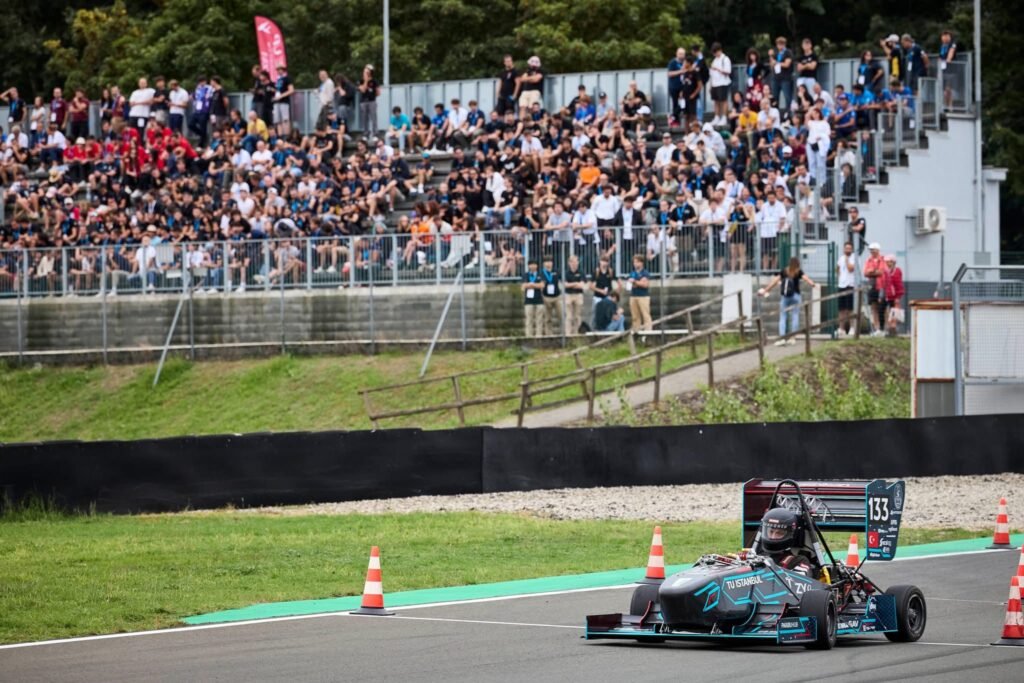
Despite these obstacles, Formula SAE continues to be a privileged gateway for many young engineers aspiring to enter the automotive world. However, it’s important to highlight that the job opportunities stemming from participation in these competitions are not always what one might expect.
An increasing number of major automotive companies are now more inclined to outsource certain specialized skills, relying on younger professionals for consultancy projects. Many of these young engineers find employment in engineering, electronics, and mechanical consulting firms that support large OEMs (Original Equipment Manufacturers).
The economic challenges facing the sector also affect the availability of long-term positions. The lack of investment in traditional car manufacturers and the slowdown in hiring across certain areas of the automotive industry have reduced in-house job opportunities. Nevertheless, the skills acquired through Formula SAE remain highly valued, especially for technical consulting roles. Industries are adapting to a new economic landscape, where hands-on experience gained in competitions, like Formula SAE, is considered a valuable asset, though not always sufficient to secure a stable position within major automotive groups.
Despite everything, italian teams don’t give up
Despite the previously mentioned challenges, Italian teams managed to achieve great satisfaction in this edition.
In Class 1CV, which includes single-seaters powered by combustion or hybrid engines, More Modena Racing claimed overall victory and was awarded the Ferrari prize for excelling in the “Endurance & Efficiency” event.
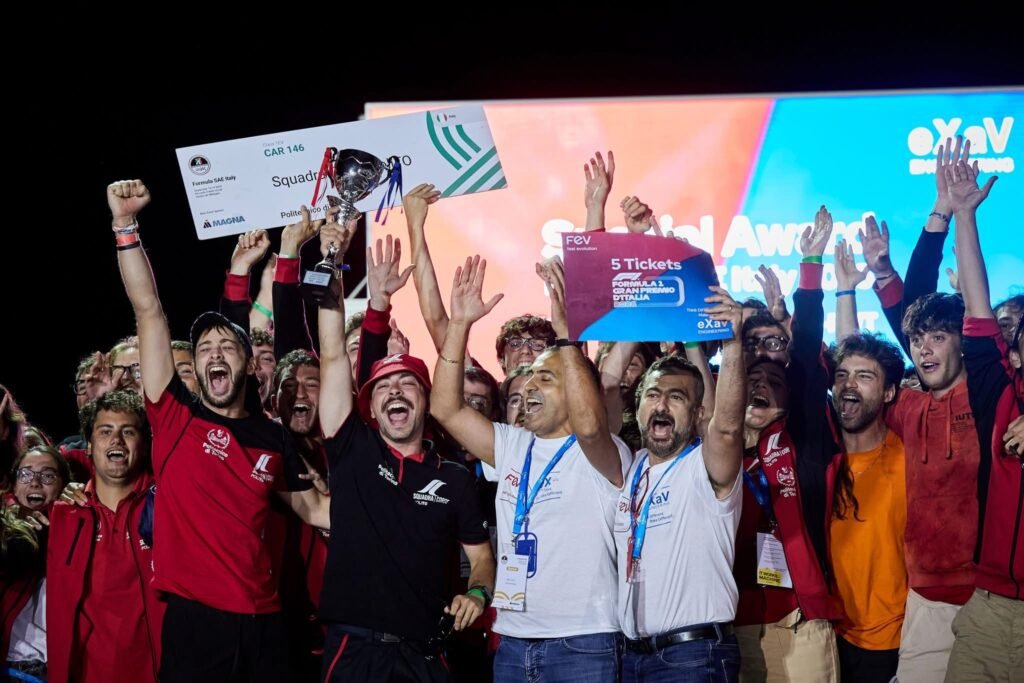
In Class 1EV, dedicated exclusively to electric single-seaters, Squadra Corse PoliTo from the Polytechnic University of Turin won two special awards presented by sponsors: the Teoresi Award, for designing an innovative electronic system, and the FEV eXaV Award for Innovative Strategies in e-PWT System Control.
Moreover, the team presented the best “business plan” in its category.
These victories demonstrate that the drive to innovate remains strong, despite all the challenges currently testing our automotive sector.
Conclusion
Formula SAE remains a highly valuable competition for engineering students, yet it is not immune to the challenges posed by the global economic context. While some teams benefit from substantial funding, others struggle to secure the resources needed to compete at the highest level.
The growing interest in autonomous driving signals a shift, but the reality of the automotive sector, the global crisis, and the lack of a shared vision for market evolution are slowing the adoption of these technologies. Career opportunities stemming from participation in events like Formula SAE have evolved alongside the economic and industrial landscape. Nevertheless, the competition continues to serve as a springboard for young talent in STEM disciplines.