

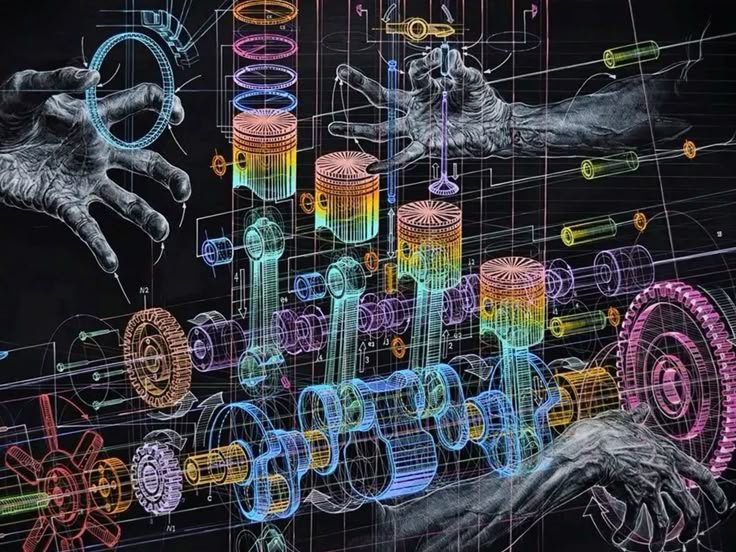
In modern racing, every millisecond can change the outcome of a race. What makes the difference isn’t just aerodynamics, strategy, or driver skill, but also invisible technologies working behind the scenes: microprocessors, sensors, hybrid systems.
As we’ve seen previously in our column on the use of Artificial Intelligence in racing, this too is a topic often overlooked in technical discussions in the paddock. Despite this, quantum mechanics is one of the cornerstones of innovation on the track.
Power Electronics and Quantum Physics
The electronics that govern control units, engines, and energy recovery systems in racing vehicles are based on devices that operate thanks to fundamental quantum phenomena.
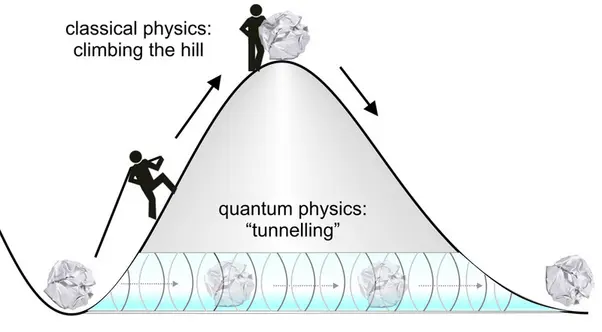
MOSFET transistors, for example, are the heart of all microprocessors and control systems found in ECUs, inverters, and engine management modules. Their ability to regulate current flow depends on quantum properties of the semiconductor material, such as band structure, doping (the controlled introduction of impurities to modify conductivity), and phenomena like quantum tunneling—which allows electrons to pass through potential barriers that would be insurmountable in classical conditions.
In motorsport, these technologies are directly applied in the management of electric motor inverters, energy recovery systems (ERS), and the power supply for ECUs controlling hybrid systems and onboard electronics.
In recent years, traditional silicon-based MOSFETs have gradually been supplemented—or even surpassed—by solutions based on more advanced semiconductor materials. Silicon carbide (SiC) has gained popularity thanks to its superior thermal efficiency and ability to operate at higher voltages and temperatures, with faster switching times. This makes it ideal for applications in Formula E and electric hypercars, where every watt counts.
Even more innovative is gallium nitride (GaN), which enables more compact, lightweight, and faster devices that can operate at high frequencies and deliver better performance in high-power-density environments, such as competitive electric powertrains. The quantum behavior of electrons in these materials—especially the width of the bandgap and electron mobility—is what makes all of this possible.
Oscillators, Synchronization, and Sensors
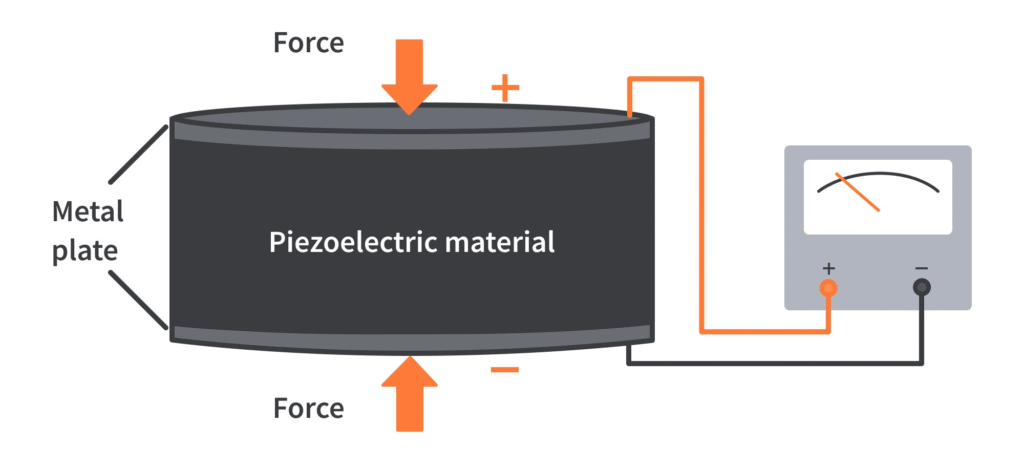
Timing management and synchronization among the various electronic subsystems within a race car is an extremely precise task—enabled again by a quantum effect: piezoelectricity in quartz crystals.
Piezoelectricity is a physical-quantum phenomenon whereby certain crystalline materials, like quartz, generate a voltage when mechanically compressed—and conversely, deform when subjected to an electric field. This property is linked to the asymmetric arrangement of atoms in the crystal lattice, which enables a direct and measurable response to external stimuli.
Microcontrollers in ECUs, telemetry systems, electronic gearboxes, and communication protocols (like CAN) use quartz oscillators to generate a clock signal (an electronic pulse that acts as a metronome to synchronize digital circuit operations) that is stable and consistent. Quartz vibrates at an extremely precise frequency when subjected to voltage due to its lattice structure. This vibration—a phenomenon tied to quantum interactions within the lattice—is the foundation for real-time synchronization of all electronic systems, which is crucial for electronic gear shifting or hybrid energy management.
In force detection as well, quantum physics plays a key role. In Formula 1 and endurance categories, piezoelectric load cells—often based on quartz crystals—are used to monitor loads on suspension, tires, and structural components. These sensors generate a voltage in response to compression and deformation, thanks to quantum effects within the crystal’s structure. The precision and reliability of these measurements are essential for aerodynamic calibration and for studying the vehicle’s dynamic behavior under extreme conditions.
Energy Storage Systems and Material Quantum Physics
The growing electrification of motorsport—evident in Formula E, endurance prototypes, and even in F1—has brought to the forefront another area where quantum physics plays a central role: the development of new materials for energy storage.
Today, batteries, supercapacitors, and electrolytes are designed by simulating matter behavior at the atomic level. The use of computational tools like Density Functional Theory (DFT), and Quantum Transport Modeling allows engineers to model the electronic and ionic properties of materials, optimizing their efficiency, thermal resistance, and charging speed.
Supercapacitors are among the most promising solutions for delivering instant energy, for example during overtaking or braking energy recovery (MGU-K). Unlike batteries, they don’t store energy through chemical reactions, but via electrostatic charge separation on the surface of electrodes. The materials used—often graphene or activated carbon—have an electronic structure strongly influenced by quantum phenomena like ion adsorption and confinement in nanochannels.
Another system under development is the Lithium–Sulfur (Li–S) battery, which promises energy density up to five times greater than traditional Li-ion cells. Quantum physics is used to simulate molecular interactions between lithium and sulfur, design new cathode materials capable of trapping polysulfides, and understand the electronic behavior of the chemical bonds.
Among the most revolutionary innovations are solid-state electrolytes, which completely eliminate the flammable liquids found in conventional cells. This not only improves energy density but also enhances safety in the event of a crash. On the quantum level, research focuses on optimizing solid-solid ionic conduction, reducing interface resistance, and modeling quantum tunneling effects that allow ions to pass through energy barriers.
Finally, all-silicon anodes represent an extreme frontier for creating lightweight, compact batteries suitable for fully electric race cars. Silicon can store a much larger quantity of lithium ions compared to graphite, but tends to expand during charging. Once again, quantum physics plays a key role in simulating the electronic structure of doped silicon, studying electron transport, and designing solutions that improve flexibility and conductivity under stress.
Quantum Computing
To complete the picture, it’s worth mentioning quantum computing—an emerging frontier that could revolutionize the development of many technologies used in motorsport. While today’s transistors are based on controlled quantum effects in semiconductors, quantum computers go further, leveraging qubits, superposition, and entanglement to solve problems that are too complex for classical computers.
The goal of these tools is to drastically accelerate design and simulation across all sectors of the automotive industry—from the development of new composite materials to mathematical modeling of components, and overall optimization of aerodynamic flows and CFD.
This isn’t yet a technology directly integrated into vehicles, but it’s already a strategic resource in independent R&D centers and OEMs, where it’s used to anticipate solutions that could become standard in upcoming motorsport tech cycles.
In conclusion, quantum physics is not just an abstract lab concept: it is the technological foundation that allows modern racing to push beyond limits. From transistors in microprocessors to advanced energy storage cells, every on-track innovation is born from quantum principles and increasingly sophisticated atomic-scale simulations. Today’s motorsport, as it becomes more electrified, is inseparable from quantum mechanics. And it is precisely in the invisible—in the nanometer scale and in the entanglement of electrons—that the next industrial revolution is unfolding.