
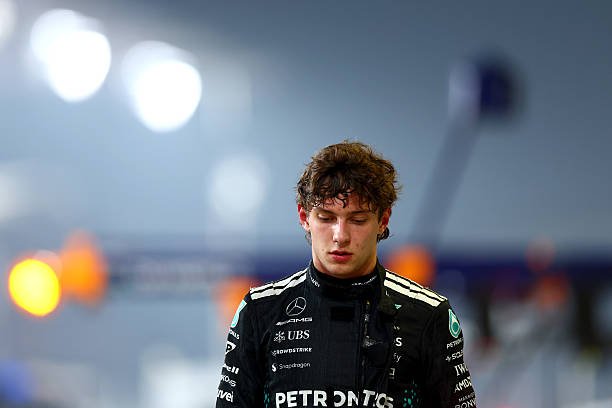
Nowadays anyone who has a mobile phone, probably also has social media: we are talking about millions of people connected through the internet! Paddocks and our favourite drivers don’t shy away from this phenomenon either: we really feel like we’re making a connection with them.
The birth of internet
The sentence “everything was better before” can be heard many times. There isn’t a doubt that occasionally it really is that way. When in 1983 the TCP/IP protocol became public, marking the beginning of the modern internet era, it became impossible to turn back time. Initially internet was used by experts and researchers, and even by the military. With its diffusion, however, it has become easy to handle by all its users. Thanks to the simplification of the medium itself, nowadays a click is enough to reach the desired information. Furthermore, we are constantly connected to each other: there is no longer any need to wait who knows how long to receive a response, with instant messages or calls everyone can be reached at any time.

We are now part of the “image society” that sees its focal point precisely in social media. The latter evolve together with society, in short, they are two sides of the same coin, and we can no longer live without them.
Social media, tv and motorsport
The majority of the population has social media profiles, some of which are private to connect only friends and family, while others are public, so anyone who wants to can follow them. This is precisely the case with drivers. Athletes’ social media profiles are currently among the most followed, and they certainly bring many new fans to the paddock. There are numerous marketing strategies around social media, specifically designed to capture the attention of many different types of people. All this happens because nowadays the most important aspects are definitely numbers and business.
In recent years, there has been a huge increase in interest in the world of motorsports, and this has been possible thanks to the internet and social media. No less are the tv series and films that have been produced to tell the story of great motorsport celebrities: “Senna”, “Le Mans ‘66” “Gran Turismo”, and the very last one released just last summer “F1”. All these representations and information have sparked the interest of new fans, who are eager to learn about motorsport culture.
Fans and new interests
But a problem arises. Often, due to social media, aspects of drivers’ private lives are considered increasingly relevant. It’s important to know where they live, how they live, what cars they drive, what they do during the holidays, who they’re engaged to, what relationships they have with their family, and so on. This way the true culture of sport is lost, because of aspects that concern no one but the driver himself, or his loved ones. No one is to blame for this, it’s the modus operandi of social media itself.
This type of curiosity constantly grows, so much so that some well-known figures have decided not to publish personal information that violates their privacy on the internet anymore. Today it’s more important to create memes, gossip pages, rather than paying attention to the information and events that truly make motorsport history.
Kimi Antonelli’s case
After the Qatar GP, Kimi Antonelli was targeted on social media by some fans. The comments were filled with hatred and threats because of what the driver “did” on the track. Antonelli was accused of deliberately moving to let Lando Norris pass at the end of the race, thus helping him score more points and move forward against his opponents (Red Bull). These, which are fundamental to a drivers’ battle still open to very few GPs from the end of the season.
The intimidations were so numerous and overbearing that Kimi took a break from social media, putting a black circle as his profile picture. The driver comments on this hostile climate that is often found on social media: “The FIA is working on it, […]. Respect must never be lacking, even towards a driver you don’t support. We go on the track to give everything, not to favor or harm our opponents. […]”
Red Bull later apologised to him, in an official statement, and Verstappen’s race engineer, Giampiero Lambiase, also clarified matters with the driver in person.
The social media storm that arose over this event was exaggerated and amplified by the media itself. All the comments were written by people who experienced the incident only as spectators and have no real say in it. Despite this, the freedom perceived on the internet intensifies everything: courage, aggression, hatred, competitiveness. And all of this leads to misplaced provocations that hurt, even when the only mistake made was of misunderstanding. Every now and then you have to remember that on social media, even if you’re not face to face, you’re always dealing with real people.
Social media shapes behavior
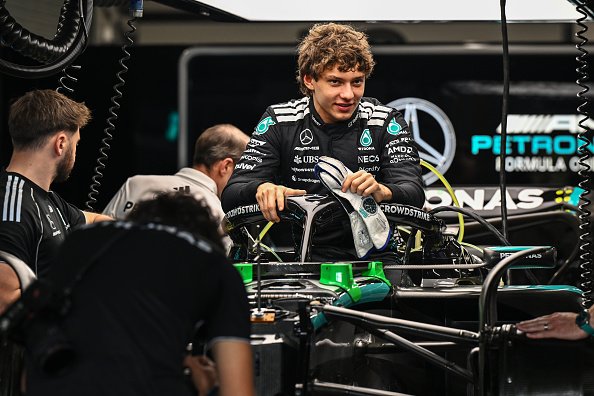
We can say that the internet plays a fundamental role in shaping the behaviors, ideas, and actions of fans. Sometimes this tool can be really helpful (constant connection and information), but on other occasions it leads to negative behavior (such as violence or cyber-bullying towards anyone with a different idea). Social media, with its ever-increasing pace, increases aggression and impatience, which often also manifests itself in sports fans. Let’s just think about when Max Verstappen was greeted by a crowd of “BOOs” after winning the Monza GP; surely this would not have happened, at least on that scale, at any era or moment.
It is important, therefore, to pass on the true values of motorsport: resilience, strength, courage, healthy competitiveness. This is fundamental, it doesn’t matter everything else around it. So we ask ourselves, was it better before or not?