
The new year has begun and there’s little time before the roar of Formula 1 engines officially reigns supreme, ending these interminable weeks of winter break.
It’s true, in recent years the season of the top motorsport category seems to want to push further into the calendar and consequently this period of “emptiness” – motoristically speaking – is getting shorter. But let’s face it: we were already fed up with days spent rewatching highlights from some unknown covered wheels series just to pass the time.
In this context, the collective tests of the Middle Eastern Formula Regional and Formula 4, held on January 13 and 14, represented a breath of fresh air, providing us enthusiasts with a first “appetizer” of action on the track.
You’re most likely wondering why we decided to follow FRMEC’s preseason tests, which typically attract the attention of a small circle of insiders.
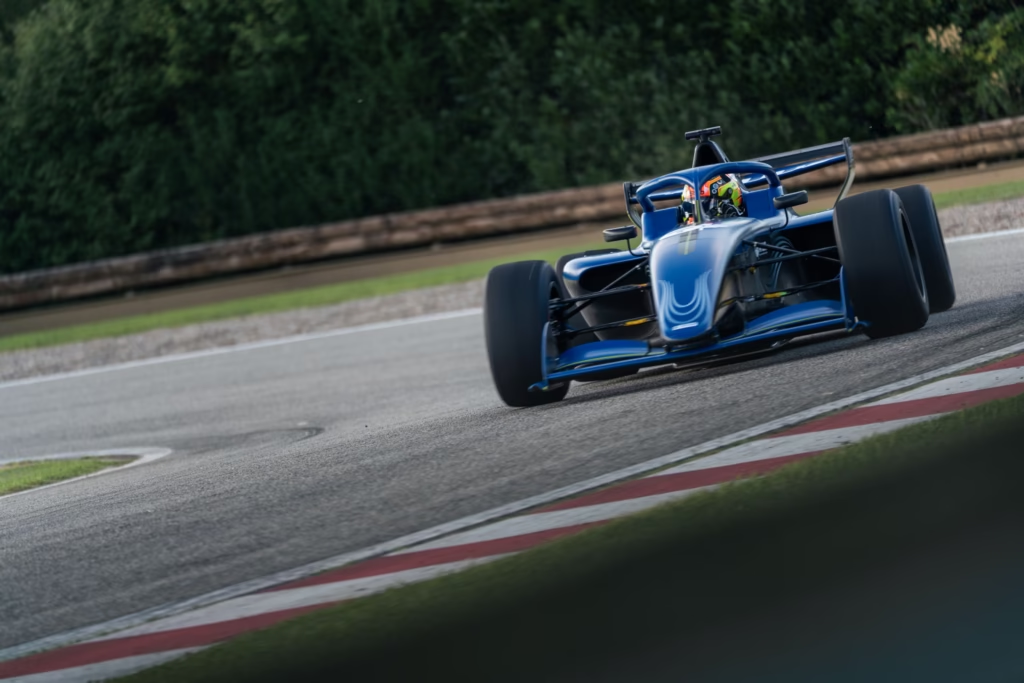
The answer is actually quite simple: in addition to finding a few names to keep an eye on throughout the year, the main goal was to start familiarizing yourself with the T-326, the last single-seater born in Tatuus, which will participate in the European and Middle Eastern Formula Regional championships and which had its “baptism” on the track during these very tests.
Following in the footsteps of the “range modernization” that has already impacted, in order, Formula 2 and Formula 3, the new single seater presents important innovations from an aerodynamic, engine and suspension point of view, with an eye also on safety and sustainability.
The macroscopic novelties
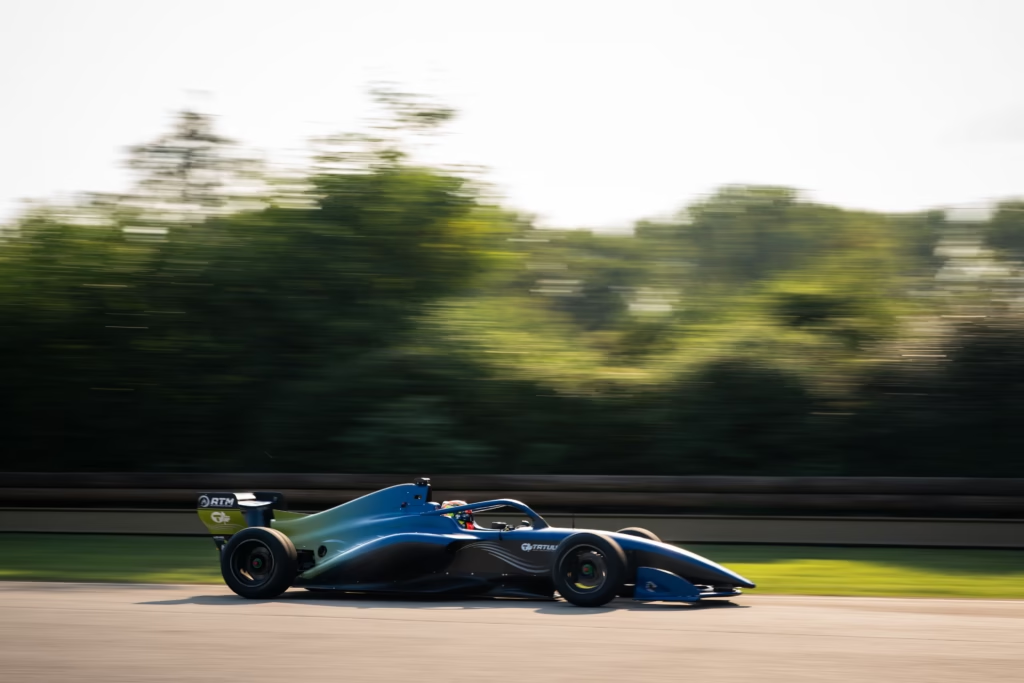
The aerodynamic line has been completely revised following the trend already seen in Formula 1, Formula 2 and Formula 3. This is to make cars less sensitive to dirty air and ensure – at least on paper – closer and more engaging battles on the track.
The profile has been significantly streamlined – especially in the front area of the chassis where the old generation of cars was “a bit thick” – to increase efficiency and in general the shapes have been softened and made less “edgy”.
This was all designed to reduce the “wake” effect, which is responsible for downforce losses in chasing cars.
There are also big changes on the tyre side: it has in fact been decided to abandon the old 13-inch tyres in favour of new 15-inch tyres.
This change, in addition to representing a significant leap in vehicle dynamics, also led to a weight gain of approximately 20kg. Tatuus reassured, however, that they had compensated for this increase in other areas of the single-seater – mainly the engine and other mechanical parts – for a total weight of around 600kg.
Hidden news
The new features don’t stop at the exterior: in fact, while Formula 2 and Formula 3, after their respective regulation changes, have remained faithful to their historic engines – the “magnificent” (not really) Mecachrome V6s – Tatuus has decided to move on, making a clean break with the past.
To replace the old 4-cylinder engines, the Italian manufacturer relied on Autotecnica Motori, which developed the ATM163T, a 1.6-cylinder turbocharged three-cylinder engine derived from Toyota.
The choice of an in-line three-cylinder engine is decidedly peculiar in the racing field: these engines have some disadvantages, first and foremost an intrinsic imbalance that can lead to vibration problems if not adequately compensated for. However, this solution is increasingly widespread in the road world, mainly with a view to reducing costs, weight and consumption.
The ATM163T promises to be the most efficient powertrain in the class’s history, bringing the project into line with the highest FIA sustainability standards.
Modifications to drivability, safety and ergonomics
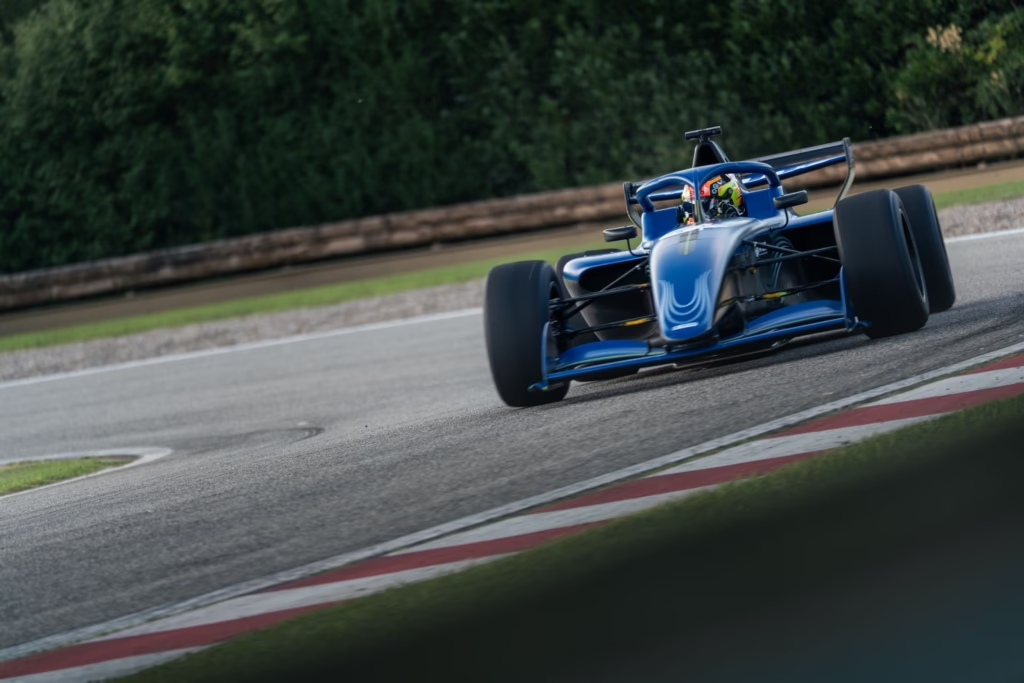
The last generation of cars had often come under criticism for being “heavy” to drive and “clumsy” when changing direction.
Tatuus then worked hard on the suspension system and steering to make the car more agile and less “physical” for the drivers. This is also to make the category more accessible to women, who have shown they pay a lot for the leap from the Formula 1 Academy – where F4s are driven – especially on the physical side.
In addition, the ergonomics of the cockpit have been updated to accommodate a wider “range” of drivers, following in the footsteps of its bigger sisters Formula 2 and Formula 3.
Added to these improvements are safety improvements, necessary to reach the targets required by the new crash test regulations – which are more stringent and complex than the previous ones.
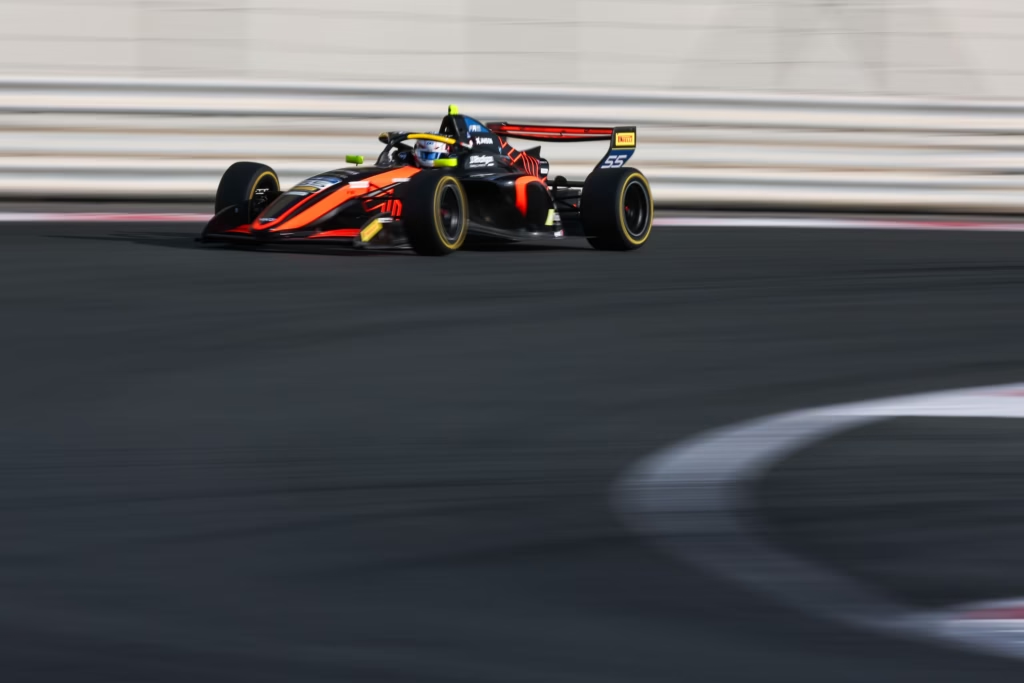
This new generation of single seaters aims to mark a significant technical step forward, while also winking at the new direction taken by the global automotive market, which is increasingly focused on efficiency and sustainability.
The Formula Regional categories have already proven to be an excellent testing ground for young talent in the past and now these new cars are called upon to maintain the training vocation of the previous ones.
Now it’s time to move from words to action: the winter break is almost over, and we’ll finally have the opportunity to find out if the project’s ambitious goals have been achieved. But the way would seem to be the right one.