
As time passes, a crystal-clear awareness emerges: for any of us to fight for our dreams, reach our goals, or simply live life to the fullest, a free mind is essential. Freedom: a word so frequently used in recent years, yet so rarely present in our daily lives.
In the midst of this frantic pace, we often forget to set aside our commitments and put ourselves back at the center. Mental health is not a subject to be taken lightly; it can affect anyone, and when it does, the pain is profound. This is why every October 10th, we celebrate World Mental Health Day—aiming to raise public awareness and promote psychological well-being as a universal right.
For this very reason, sports must place this challenge at the top of its crowded agenda. What better occasion than the recent Milano-Cortina 2026 Olympics? The Olympic dream begins in the mind. In Cortina, at the heart of the Games, the message came through loud and clear: without training the mind alongside the body, reaching the podium is significantly harder.
In recent years, the evolution of this topic across various sports—from football and tennis, to basketball and motorsport—has been fascinating. Why must we still hide behind a mask, unable to reveal our true state of mind? We live in a ruthless world where any emotion can be interpreted by the public, rivals, or insiders as a weakness.
It is precisely in this climate that the racing world faces a global challenge: to stop viewing emotionality as a “mechanical failure.”
The example of Milano-Cortina 2026
Even though the Winter Games concluded this past February 22nd, the conversation surrounding them and their protagonists continues. This is not only due to the successes achieved or the records broken. In fact, for the first time on such a massive scale, mental health was not treated as a mere appendix to athletic preparation, but as its beating heart.
The introduction of “Mind Zones”—decompression spaces dedicated to silence and anxiety management—and the implementation of sophisticated AI systems to protect athletes from toxic cyber-bullying algorithms, mark a point of no return. At Milano-Cortina, the athlete is no longer seen as a “flawless soldier,” but as a human being whose psychological integrity must be preserved. The message is clear: fragility is not the opposite of strength; it is a component of it.
“The Olympics represent much more than a competitive event; they are a collective space where educational, cultural, and relational models are built,” says Luca Pezzullo, President of the Order of Psychologists of Veneto. “Sports psychology contributes to this process not only by supporting the athlete’s performance but by accompanying the growth of the individual and society as a whole. Training the mind means developing awareness, emotional management skills, motivation, a sense of one’s limits, and responsibility toward oneself and one’s group. Sport is, therefore, a training ground for fundamental psychological skills: it teaches how to tolerate frustration, how to turn mistakes into learning opportunities, and how to handle pressure without losing one’s balance.”

Motorsport: the taboo of the “driver-machine”
Moving from the snowy slopes to the racetrack, the landscape changes drastically. In the world of engines, vulnerability has been considered a technical flaw for decades. The image of the cold, imperturbable driver has always been the only accepted standard. In an environment dominated by the risks of high speed, “being well” simply meant “having no broken bones.” The mind was an accessory that was supposed to remain switched off or, at most, set to “on.” Perhaps, however, there was a lack of realization regarding the importance of small signals and the consequences they could trigger.
Fortunately, something has changed today. Many drivers have come forward, revealing their weaknesses and highlighting the importance of caring for even the deepest mental aspects. Almost all Formula 1 drivers are now supported by mental coaches, and teams offer structured support to their athletes.
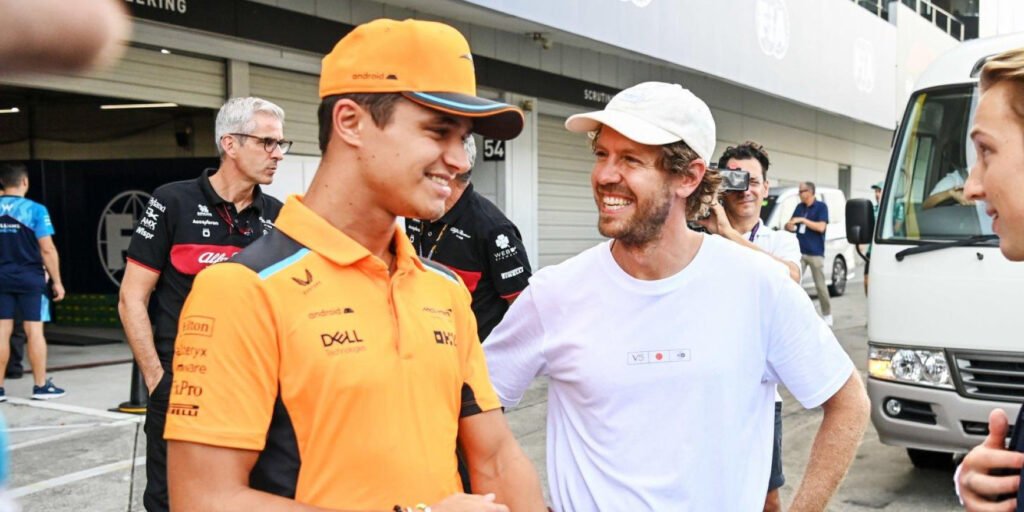
A prime example is Lando Norris. The newly crowned World Champion—especially since he began fighting for the title in 2024—has often appeared before the cameras without a mask. No scripts, no rehearsed lines: transparency was to be both the starting point and the finish line. Yet, this honesty was not viewed the same way by everyone. Amidst those who criticized or defended him, it was Sebastian Vettel who stood up to support and congratulate the englishman.
The four-time world Champion stated: “I think it’s a positive evolution in the way of thinking, because we are normal people. We have normal problems, just like anyone else. Heroism is fine, but talking about your problems and weak points is also part of it. I believe it is a great development to witness—true role models. He might be criticized by some people, but if you look at the bigger picture, it is simply progress and not a sign of weakness.”
The crack in the wall: the case of MotoGP
The tide is turning, and not just in the world of four wheels. Recent admissions from several top riders—especially in MotoGP, where the stress of new race formats (such as sprint races) and suffocating calendars have pushed many athletes to their breaking point—prove that the wall is slowly crumbling.
Admitting to suffering under pressure or needing a mental coach is no longer exclusive to other individual sports. Riders are beginning to reclaim the right to be human, stepping out from the shadow of that “toxic masculinity” which for years imposed silence on performance-related stress disorders. If at Milano-Cortina the athlete is protected by the system, in motorsport, the rider is finally learning to protect themselves, bringing the issue of mental health into the spotlight.
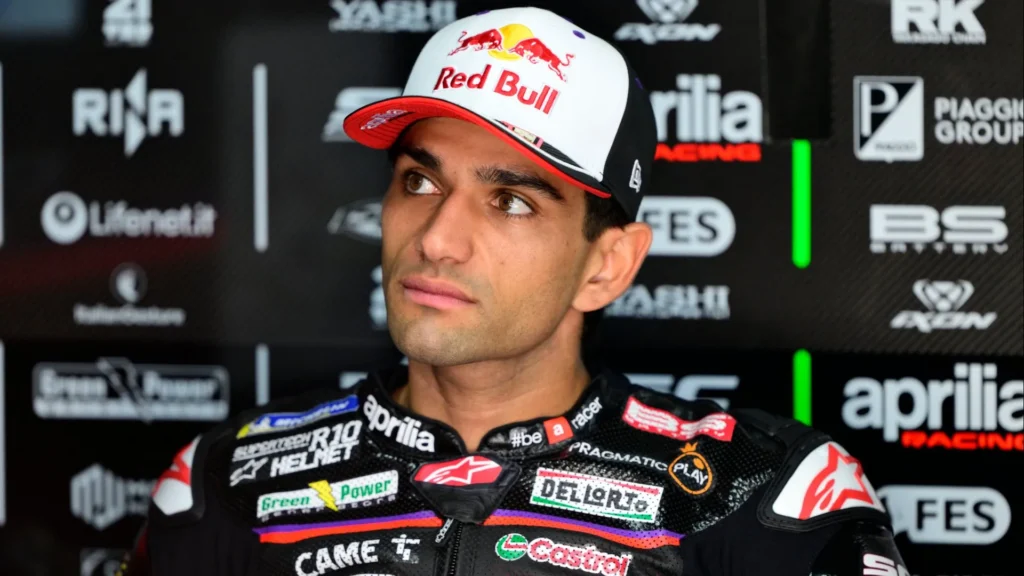
Confirmation of this shift also comes from Jorge Martín. The 2024 MotoGP world champion revealed that, leading up to that season, he was haunted by the fear of failure, despite having already accepted his 2023 defeat to Pecco Bagnaia. However, through work with his psychologist, Xero Gasol, Martín managed to overcome these mental hurdles and achieve his dream.
A new way of seeing the soul
The link between these two worlds is the growing awareness that performance is not just a matter of watts or horsepower. The true innovation of 2026 is not technological, but cultural.
Many believe that a person’s financial gain or professional status should exempt them from experiencing disappointment or hardship—as if it were mandatory to push forward alone, with one’s head down. But that is no longer the case.
Motorsport, like so many others, is a team sport. For a driver to be fast, they must be well. To achieve this, there must be a team of qualified professionals capable of supporting them. However, this conversation does not only concern athletes: it concerns all of us.
Just as the Milano-Cortina Olympics teach us that an Olympic gold medal is worth less than the health of the person who wins it, motorsport must also understand that mental health is the new frontier of aerodynamics: something that, when nurtured, allows one to go faster, longer, and, above all, more sustainably. Vulnerability is finally no longer a “glitch in the system,” but a sign that beneath the helmet beats a heart that must be protected just as much as the head.
Read also: Safety or Marketing? The fine red line of modern motorsport