
We are often used to turning on the TV and viewing motorsport drivers and teams as perfect. Frequently, in front of cameras or journalists, they appear composed despite the constant, high-level pressure they endure. However, the reality is quite different: what they project often does not reflect how they truly feel, and their emotions are frequently masked. Just like the rest of us, they have weaknesses and challenges that must be addressed with the right support system.
To be a great driver, being fast or intelligent is not enough. It requires professionalism, team spirit, collaboration, empathy, a healthy dose of self-awareness, and the confidence to perform at one’s absolute peak. For this reason, we had the pleasure of speaking with Israel Sanchez, physiotherapist and osteopath.
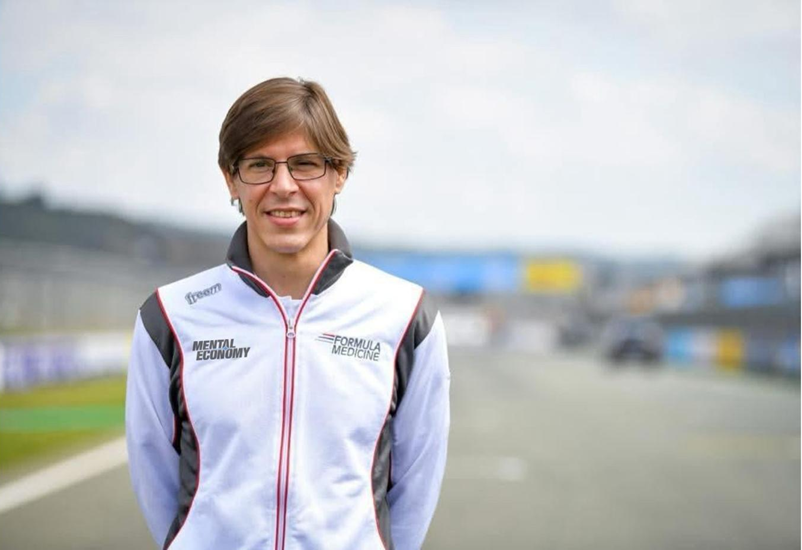
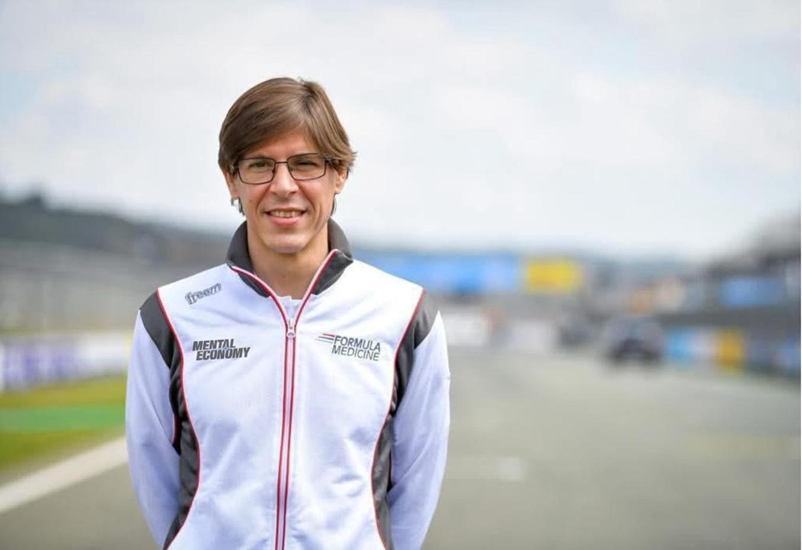
Who is Israel Sanchez?
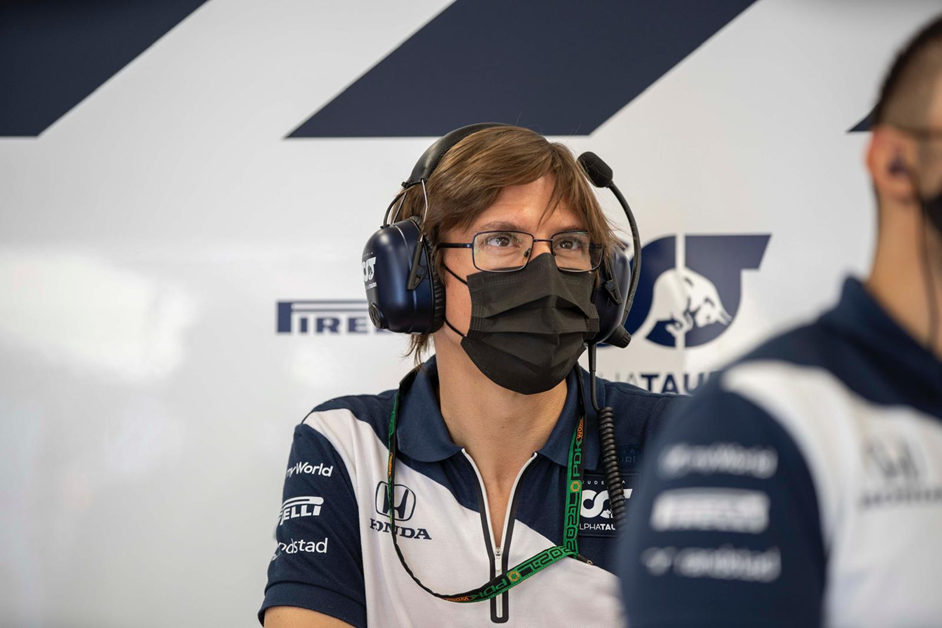
Respected for his empathy and professionalism, he is a member of the medical staff collaborating with Formula Medicine and Visa Cash App Racing Bulls. His primary role involves assisting all personnel traveling for the races, but his impact goes further. Among his responsibilities, shared with his colleagues, Sanchez is providing the necessary medical support to ensure every team member can perform their duties to the best of their ability.
In addition to this, Israel Sanchez works alongside the sporting management to enhance the performance of the pit stop crew, a group of about 25 people. A fundamental aspect of his work is the physical well-being of the team: he ensures each member is in good health, offering support to management to optimize overall performance. Together with the Formula Medicine staff, they provide a comprehensive 360-degree service of medical, athletic, and mental support.
However, it’s not just about the physical aspect. The mental side is equally important. Israel Sanchez emphasizes that the tire-change process requires intensive training based on precise coordination, both individually and collectively. Nevertheless, internal or external factors can compromise the group’s psychological balance. For this reason, he and his team are committed to providing targeted psychological support, ensuring every member can face challenges with clarity and composure.
As previously mentioned, mental health has become an increasingly prominent topic in public discourse in recent years. It is a fundamental component of our daily lives, affecting everyone from professional athletes to office workers without distinction. Who better than Sanchez to analyze and interpret this growing focus on a subject that, in the past, was often overlooked?
“In the past, there was less attention paid to small details. Today, however, in high-level sports—as well as in the workplace—the mental aspect is vital. When you have to make decisions or perform tasks that carry a heavy burden of responsibility, you cannot allow yourself to be swayed by any kind of outside influence. You must be careful not to let negative factors, whether internal or external, take hold. In short, it is essential to stay present, clear-headed, and focused.
Communication itself can create situations that lead to mental strain, or uncertainties can emerge following mistakes. Our task is to reassure the athlete and the team, keeping spirits high, because this is a team sport: we work on the group dynamic and on motivation.
When things are going well, everyone is happy. But when they go poorly, it’s easier to get discouraged. It’s like a tennis player who loses a few points: they know they must keep going and give their all, even in the most difficult moments and that is exactly what we aim to do. We are not involved in the technical or mechanical aspects, but we strive to give them our full support through warm-up exercises, reflex training, and coordination drills. We often set up challenges and team-building activities. Being together is fundamental.”
An Ever-Growing Passion
How did his passion for healthcare and, subsequently, for motorsport begin? Israel Sanchez tells us that his love for both blossomed during the earliest stages of his life.
“It all stems from the same root. My father was in love with motorcycling and was a rider himself; I watched him on the track since I was a child, trying to help him as much as I could. When I was five, he bought me a bike and I started riding.
I dreamed of racing since I was little, but I had to wait until I was 16. Then, he stopped and I began. Like all riders, I broke a few bones: unfortunately, it happens, especially in motorcycling. However, that’s when I met the physiotherapists who helped me get back on track. That was my introduction to physiotherapy: it fascinated me and, since everyone in my family was a motorcyclist and everyone had broken some bones, there was always someone in need of rehabilitation. It was a very natural evolution.”

Was the passion for cars already there?
Yes, but not as much as for motorcycles. Among various anecdotes, Israel Sanchez shares that until he began working in the sector, he didn’t follow many races. However, he was fascinated by karting and by Alex Zanardi, with whom he later had the opportunity to collaborate. His entry into the world of four wheels was “by chance,” as he puts it. Thanks to Riccardo Ceccarelli—a figure from whom he learned a great deal—Sanchez managed to make a name for himself in the big leagues.
What led him to choose this field of study and the related professional career?
“It was maturity that guided me toward what I do today. While I was racing, all I wanted was to be a rider—I didn’t think about anything else. Over time, however, I realized that only a few people manage to break through in the world of motorcycling. I decided to study physiotherapy because caring for people was what I enjoyed most. I also received job offers different from what I do now, still within the sports world, such as working as a tire technician, but that wasn’t what I wanted to do. I liked the idea of treating people, and I managed to combine that with my passion for racing. This makes me very happy. It was maturity that led me to this choice, along with a combination of many factors.
I had the opportunity to treat patients in completely different conditions, and after a few years I discovered osteopathy—a somewhat different field, more focused on prevention. With osteopathy, you give people, or the body, the chance to heal itself, provided there are no serious pathologies. Obviously, the mental aspect is fundamental in sports, and I learned some concepts from Formula Medicine. It is a physical gym, but not only that: it is the only mental gym in the world, where a working method is applied to drivers and athletes. It is a method that works: I acquired those concepts together with the psychological component, which is essential in this field, and I was able to expand it into the sporting aspect.”
“What is the most rewarding aspect of your job? And the most demanding one?”
“The part I love most is undoubtedly being able to help the riders stay in shape and perform at their best. Every athlete is different: some need to work on excesses, others on deficiencies, but in the end the secret is to accept each person for who they are. We are all human beings, and the ability to adapt to different situations is one of the most beautiful challenges of this profession.”
Israel Sanchez also emphasizes how engaging the work is during competitions. “Race day is the most intense moment. Working alongside the sporting staff and providing support during the sessions is essential. When conditions are extreme, such as in cases of excessive heat, we step in with ice, hydration supplements, and nutritional support—everything that’s needed to allow athletes to express themselves at their best.”
But challenges are never lacking. One of the most difficult aspects to manage is jet lag. Israel Sanchez explains that when he is on the other side of the world, even after days of preparation, maintaining concentration becomes extremely difficult. It is a challenge that goes beyond the physical dimension: it requires balance, patience, and a great deal of attention.
“Long-haul flights are truly exhausting. Jet lag can become a silent enemy: it disrupts rest and adds further fatigue to what has already built up. For example, it can happen that you travel from the United States to Mexico and then on to Qatar within the span of three weeks. In these cases, you are completely ‘shaken up’: the effects on both body and mind are very intense, and you have to be careful not to underestimate them.”
The importance of mental aspect
Israel Sanchez also highlights the importance of psychological support in everyday work with athletes. Some need to be motivated, while others prefer to be calmed down. It is a subjective matter: everyone handles tension differently. For this reason, the main goal is to provide comprehensive support that addresses not only the physical aspect, but the mental one as well.
Before joining the Racing Bulls team, Sanchez also had the opportunity to work with individual drivers. We asked him what, from his point of view, the difference is in preparation between a driver and a pit-stop crew.
“To be honest, I have never dealt directly with physical training in the strict sense, as I am an osteopath and physiotherapist. I support the members of the pit-stop crew in carrying out the programs pre-set by Formula Medicine’s physical trainers, complementing them with individualized exercises to improve performance and reduce the risk of injury.
My main role is that of physiotherapist for the entire team: this involves not only treatments, but also specific functional rehabilitation programs. Our services and the support we offer the team are constantly evolving, in an effort to keep raising the bar and maintain a high level of motivation.
With drivers, on the other hand, my role is generally more focused on trackside assistance and practical support during all sessions, combining manual treatments with a constant pursuit of improved athletic performance. What I have learned is that each person is a world of their own: there is no universal method that works for everyone.”
Israel Sanchez emphasizes how important it is to adapt to individual needs: “I am not a strength and conditioning coach, but experience has taught me that the key is knowing how to shape yourself around the person in front of you. Understanding their limits, their resources, the way they react. That’s where the real difference is made.”
He also adds that, despite working with very different profiles, there are some common elements in athletes’ preparation, especially in the world of motorsport.
“One aspect shared by everyone is strengthening the neck muscles, which is essential to withstand the stresses experienced while driving. Beyond that, however, every driver has their own preferences and approach. Some favor certain methods over others: I remember, for example, that Kvyat loved boxing and used to warm up in a boxer-style routine. For him, it was an effective way to get activated, because he was doing something he enjoyed.”
In addition to physical preparation, there are other aspects to take into account: concentration, reflexes, and coordination are fundamental and are trained through targeted exercises. Then there is motivation, which plays a crucial role. It is a factor that must be managed carefully, as it has a profound impact on performance.
“In your support role, are there differences in the approach you take?”
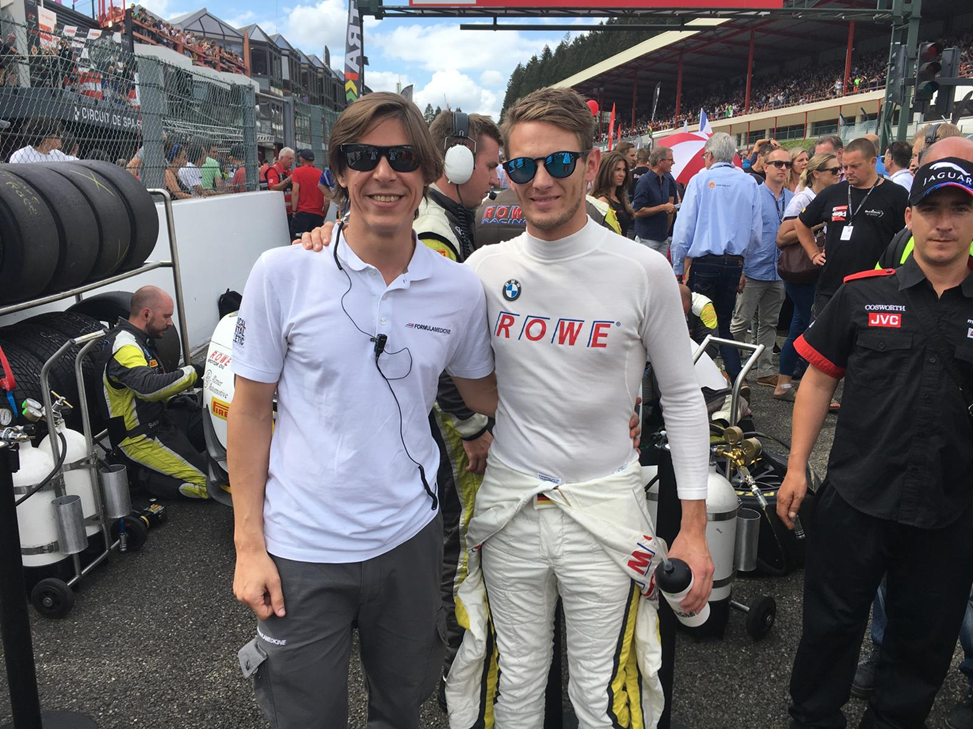
“Absolutely yes. I’ve found myself assisting as many as six to eight drivers at the same time, and the communicative aspect is fundamental—you have to be available and kind to everyone. Each person processes and releases stress in a different way. You may find yourself in situations that aren’t particularly ‘pleasant, ’ but you have to be able to take it in stride, because after a short time they’ve reset and you’re friends again, just like before.
What you do is adapt to them, which is why our service is very complex. There are many aspects to take into consideration, such as nutrition and specific treatments: some people want to be treated often, while others don’t want to be touched at all.”
From a nutritional point of view as well, we can offer suggestions, but each driver may choose to follow them in a different way. I remember that during a 24-hour race one driver ate a bag of potato chips before a stint. Some ask for certain chocolates, while others drink carbonated beverages before qualifying. What can you do as a trainer? These are very subjective aspects; sometimes you let it happen for mental reasons as well: many see it as part of their routine, and that’s perfectly fine.
In the case of the pit-stop crew, however, it is very different: you work with 25 people at the same time, so the service is less personalized, even though I still try to adapt to each individual as much as possible.
Of course, I can also follow and supervise individual preparation programs, but these must be accompanied by collective work: in the competitive environment, the goal is always to stimulate the guys, motivate them, and maintain a positive atmosphere within the group.
The beginning of his career
Sanchez’s career in motorsport did not start behind the scenes, but on the front line. Before becoming a physiotherapist, he was a racer himself. The transition from the asphalt to the treatment room happened with almost no break in between: “As soon as I stopped racing, I was already there at the first race of the following season, with a treatment table and a university classmate,” he recalls with a smile.
The world of racing was by no means unfamiliar to him. He knew the drivers, the dynamics, the tensions. And precisely for this reason, the separation was not easy.
“I worked with many drivers, across all categories. It was tough, because I strongly felt the pull of the engines. But I had made a decision, and I knew it was the right one.”
From that moment on, Sanchez began to build his new career, made up of support, listening, and constant presence, a path that, step by step, led him to become a key figure in the paddock.
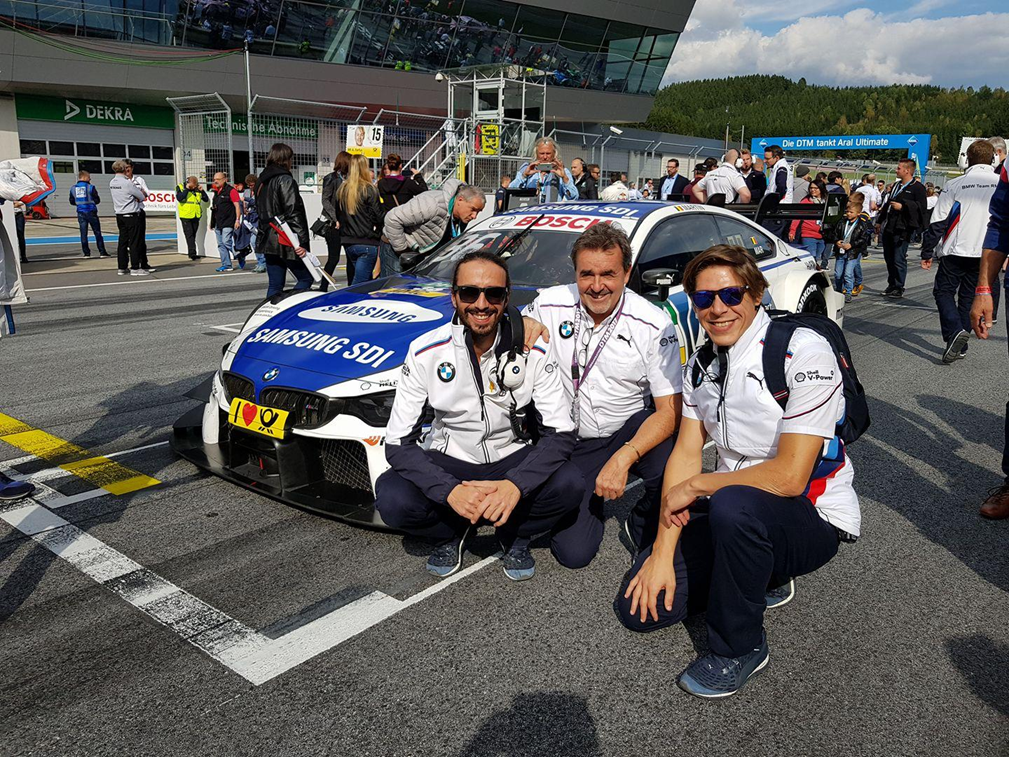
It was precisely his love for racing that brought him closer to Formula Medicine. With cars, he immediately had the opportunity to work in top-level championships: being part of BMW in the early stages of his career was a great pleasure for him, a formative experience that allowed him to learn a great deal and to come into contact with high-caliber drivers.
According to Israel Sanchez, for those working in the field, the differences between car racing and motorcycle racing are not all that pronounced.
“Permanent circuits are often the same, and the working method and mindset share many similarities. At first, I thought the transition from one discipline to the other would be much more clear-cut, but in reality the real difference lies in the drivers.”
Understanding this wasn’t immediate. “Over time, I realized that motorcycling requires more physical preparation, while car racing has a much more pronounced mental component. This wasn’t clear to me at first, but it is fundamental: psychological management, clarity, and the ability to maintain concentration are elements that truly make a difference on track.
“Motorcycles don’t take up much space on the track, so mistakes are less costly, whereas cars, being larger, reduce the margin for error. On top of that, you have to manage many more things, such as tires, the car itself, communication with the pit box… there are many factors that motorcycle riders don’t have to deal with. You need to be fast, strong, and above all, multitasking. Body and mind are strongly connected: significant mental stress can reflect physically, so minimizing it can bring great advantages.”
“What advice would you give to someone who has studied in a healthcare field but wants to somehow stay in the world of motorsport?”
“As with any other job, I recommend humility, a willingness to learn, and above all, passion. Being ready to listen to those with more experience and having the humility to accept their valuable advice is key in any profession.
I am someone who doesn’t like to appear as something I’m not, and I believe that being ‘authentic’ is important in the workplace as well. To enter a particular world, you need to know it well—but above all, you need to love it. This is even more true in my role as a physical trainer, where you have to consider that every sport is different and requires specific working methods.
When you start working at a high level in any sport, you face a significant level of stress: no matter how much fun you have, you absolutely need to love the sport in order to keep going under that pressure, especially when things aren’t going well.
In motorsport, there is an additional challenge: you are often away from home, which can also impact your personal life.
So I always recommend thinking very carefully before taking on such a demanding path. But if you have passion, a strong work ethic, and determination, then it is truly worth giving it a try.”
Read also: Who is Arvid Lindblad, the only rookie debuting in F1 in 2026?