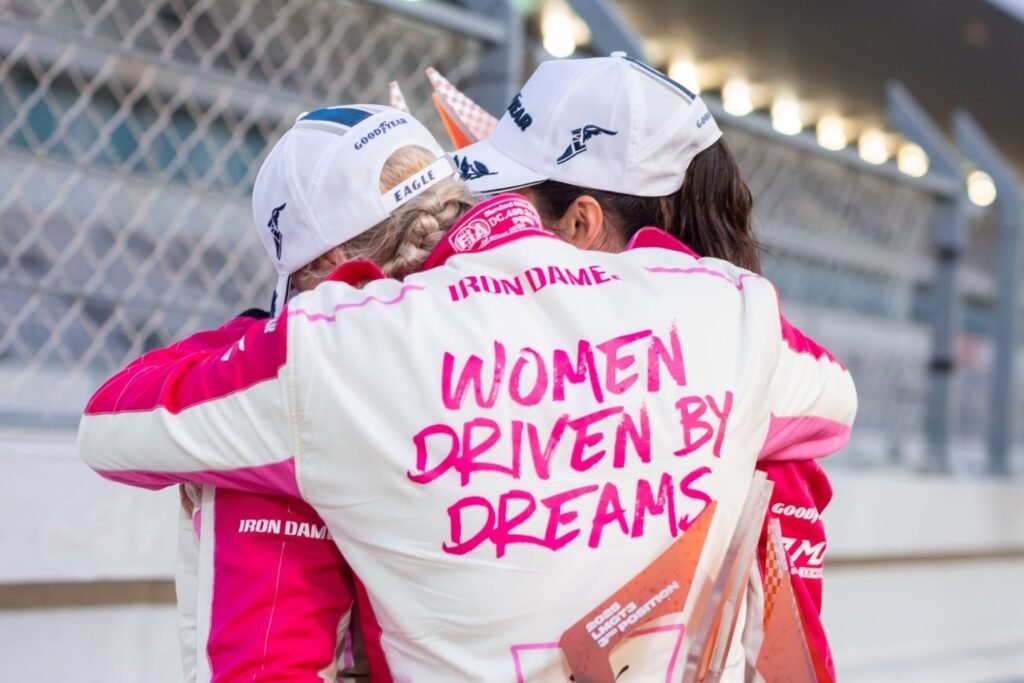
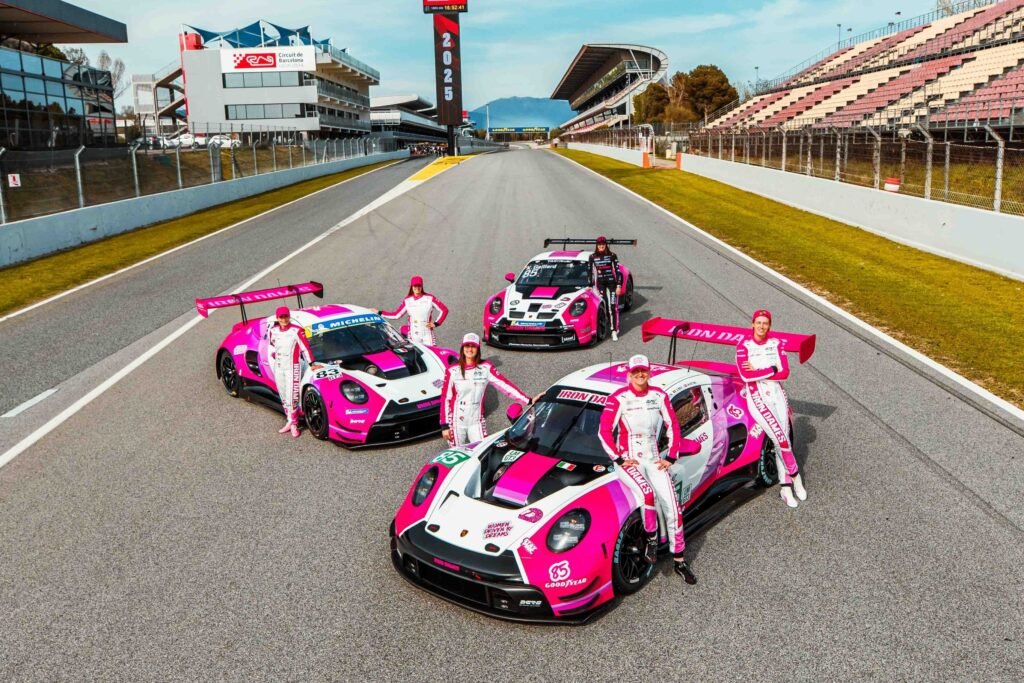
It wasn’t exactly a bolt from the blue. The shutdown of the Iron Dames’ WEC program had already begun to look likely during the final phases of the 2025 World Championship. But with no female representatives on the grid, with F1 Academy still far from achieving its goal, what remains for women in motorsport?
Even the language we use still hesitates. How do we talk about a woman behind the wheel? The answer is unclear. But for those who have followed motorsport with heart rather than formality, that uncertainty fades. The victories of the women who made history and the wonder in a young girl’s eyes at her first race have always spoken louder than labels. Passion still stands upfront.
But we have entered an era in which formalities do matter. And in motorsport they must matter, because in the last five years the target audience has changed dramatically. Circuits have begun to fill not only with huge numbers of young fans, but also with countless women: adults, children, shyly fascinated partners, and die-hard supporters. The conversation has grown louder and louder and, alongside this new era of Formula 1 (which has now spilled over into motorsport as a whole), came the first significant initiatives aimed at promoting women in racing.
Between Iron Dames and F1 Academy
If there is one project that – regardless of results or ups and downs on track – has truly inspired women in motorsport, it is surely the one launched by Deborah Mayer in collaboration with Iron Lynx: the Iron Dames. A program built around an all-female lineup competing in major endurance series, designed to prove that women could race at the same level as men.
And in 2018, the Iron Dames immediately wrote a key chapter in their story by racing the 12 Hours of Dubai. With Michelle Gatting, Rahel Frey and Manuela Gostner, they stepped straight onto the class podium in second place. The Iron Dames soon expanded into more championships, becoming the first all-female crew to win a WEC race and the main point of reference whenever the topic of women in motorsport arises – supported by a media strategy that captured the hearts of thousands of fans.
Meanwhile, in 2019, the W Series was born. The first all-female single-make championship aimed at bringing women closer to Formula 1, hoping to discover that one crystal-clear talent to push up the ladder. After a few fruitful years, however, the program shut down due to major financial issues – the harsh reality of motorsport.
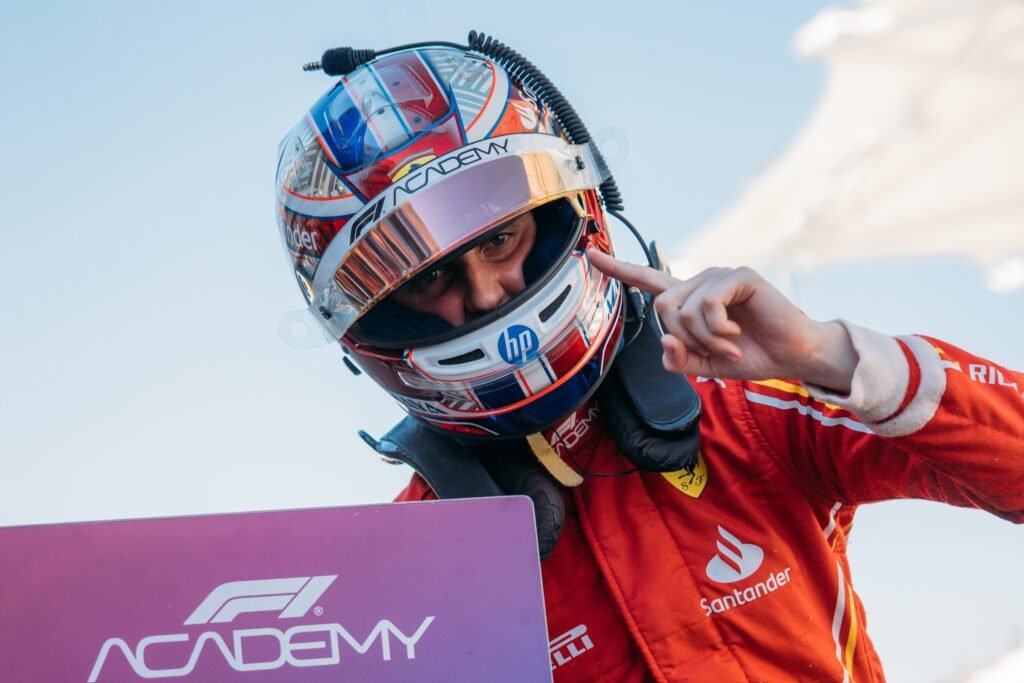
But within two years, Formula 1 itself launched its own women’s series: F1 Academy. A single-make championship modeled after FIA’s feeder series, created to find the first female driver of this generation of Formula 1. A series often criticized as segregating and stereotyped, but one that undeniably put the conversation front and center. The issue today, however, is no longer not talking enough about women in motorsport. Topic is everywhere, and thousands of women are now involved in the sport. And the question now is: what future is there for those who want to race?
And now?
The Iron Dames program announced that after the end of the 2025 season, it would say goodbye to the World Endurance Championship, stepping away from a seat that had become something of a certainty over the years. F1 Academy has yet to find its shining star, its mini Max Verstappen, and is actually starting to lose some of its most promising names due to the rule that forces drivers to leave after two seasons. Lia Block is returning to rallying, Doriane Pin is testing prototypes, Maya Weug is driving the Ferrari 296 GT3 with AF Corse. None of them will ever see Formula 1 in their careers. And what about their champions? Marta Garcia is racing GT, while Abbi Pulling is doing GB3. So what remains when even world championships lack female representation?
The Importance of being represented
What is certain is that seeing women in the paddock, pit lane or on track is no longer unusual. The initiatives of recent years have undeniably encouraged those who dreamed of working in this world to step forward, to try, to fight. “If they did it, then we can do it too.” For those who live motorsport every day, the results achieved by the Iron Dames might seem small – perhaps even the “bare minimum”, as the current saying goes. But for those who have always admired the performances of any racing crew, the chance to see themselves reflected in something so familiar is irreplaceable. Regardless of performance, representation matters.
Of course, motorsport’s objectivity still needs to apply to these projects: is there truly potential for the future? Are we working with drivers who are talented and deserving? But at least a foundation exists. A starting point. Someone to look up to. There are the FIA WIM initiatives, with Girls On Track offering hands-on entry into motorsport, access to paddocks of various championships, and dedicated workshops to learn even more. Brands willing to invest in programs for girls. A growing desire to bring female audiences even closer to the sport.
Yet today, the question inevitably arises: is it enough? Will we truly see a woman from this generation reach Formula 1 thanks to these programs? Is there space for her on that grid, or in the WEC, or, more broadly, in top-level championships?