
In recent years, the global motorsport landscape has been undergoing a silent but profound transformation. On the one hand, there is Formula 1, queen of speed, which has achieved enormous media popularity. On the other, the FIA World Endurance Championship (WEC) is making its way, a championship that today is attracting new manufacturers and a large segment of enthusiasts looking for new emotions.
But why are more and more fans approaching 24-hour marathons rather than the classic Sunday Grands Prix? Let’s look at the main differences between these two worlds.
The cars
In F1 we see single-seater open-wheel cars with open cockpits. Over time they have changed their appearance, following innovations by the manufacturers but also adapting to the regulations. Although each manufacturer presents cars with different details, there is only one type.

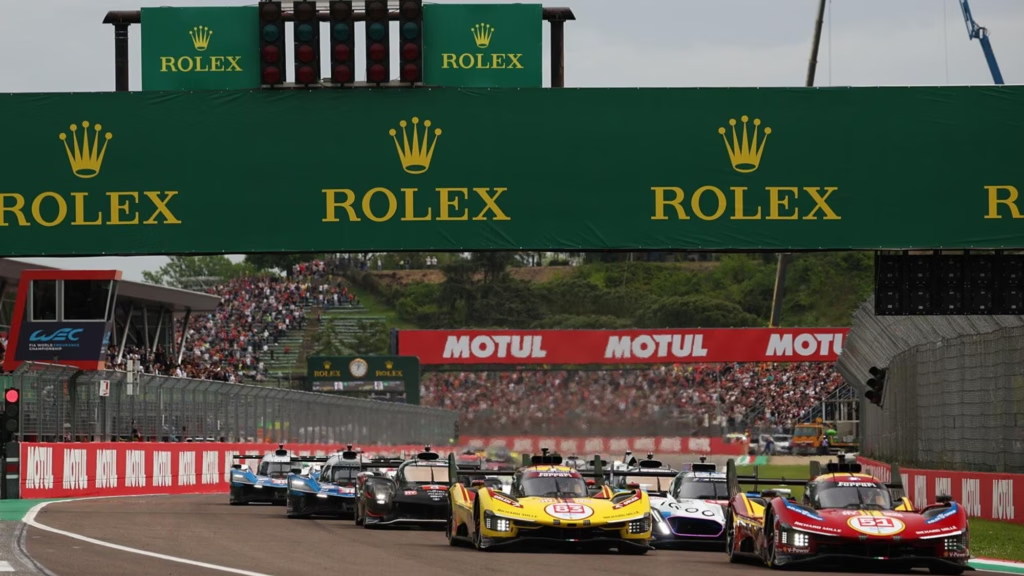
This doesn’t happen in the WEC championship, which leaves much more design freedom. From 2024 the championship is divided into Hypercar classes, reserved for prototypes, and LMGT3, dedicated to grand touring cars derived from production models.
The prototypes are two-seater, covered-wheeled cars designed specifically for motor racing. While grand tourers (GTs) are covered-wheel sports cars that exhibit high performance.
Seeing a Ferrari, a Porsche and a Toyota fighting on the same straight a few tenths of a second away after hours of battle gives the fans a sense of pure competition between major manufacturers that has partially faded in F1.

Time
The most fascinating difference between F1 and Endurance lies in the way time is managed and experienced.
In Formula 1, everything is compressed into a sprint logic, focused on pure speed. The typical race weekend (which includes free practice, qualifying and Sunday race), plus the increasingly frequent Sprint Races, leaves no room for breathing space. It’s designed for immediacy: if you miss the start or lose two seconds at the pit stop, the race is often compromised. Everything wears out quickly, through strategies calculated down to the millimeter by teams and softwares.
The WEC, on the other hand, expands the time and turns it into a 6, 8, 12 or 24 hour race. In six or twenty-four hours, everything can happen. The sun sets, the asphalt temperatures change and the weather too, the track rubs and then cleans. A car and its pilots must be able to adapt in different situations over long distances of time. In F1, a contact or technical problem almost always leads to retirement: you can’t rebuild a car in such a short time. In Endurance, seeing the mechanics rebuild the car in the pits to send it back to the track to fight for points provides a sporting narrative that moves the fans.
Perhaps the strength (now more than ever) of F1 is that it is the typical philosophy of our liquid society, a society that wants to consume everything immediately. Despite this, the new generations are discovering the pleasure of taking part in a long race: the wait becomes an element to be experienced.
The relationship with the public
Finally, there is a human aspect that is marking an increasingly profound difference between the two championships.
The WEC cares for its fans, maintaining a culture of accessibility that seems to belong to another era. On Endurance weekends, the crowd is not a number, but an important presence. Spectators experience the race to the fullest, through anticipation, changes of pace and moments that, in long-duration races, make the difference. In the WEC, the fan becomes an integral part of motorsport.
Formula 1, on the other hand, has been going down the opposite path lately. There is an increasingly strong commercial push: partnerships with various brands and the spectacularization of the event. The aim thus seems to be the desire to continually broaden the audience base. F1 is becoming increasingly exclusive, crowded with celebrities and influencers who sometimes have a tenuous connection to motorsport culture, while ticket prices for longtime fans continue to rise.
The success of the Endurance sends a very clear message to the entire motorsport world.
Fans, especially younger ones, no longer seek special effects only, perfectly constructed rivalries, or the presence of VIPs. They seek authenticity in the fighting dynamics typical of motorsport races, the sound of engines, and wish to feel welcomed into the paddock as true enthusiasts.