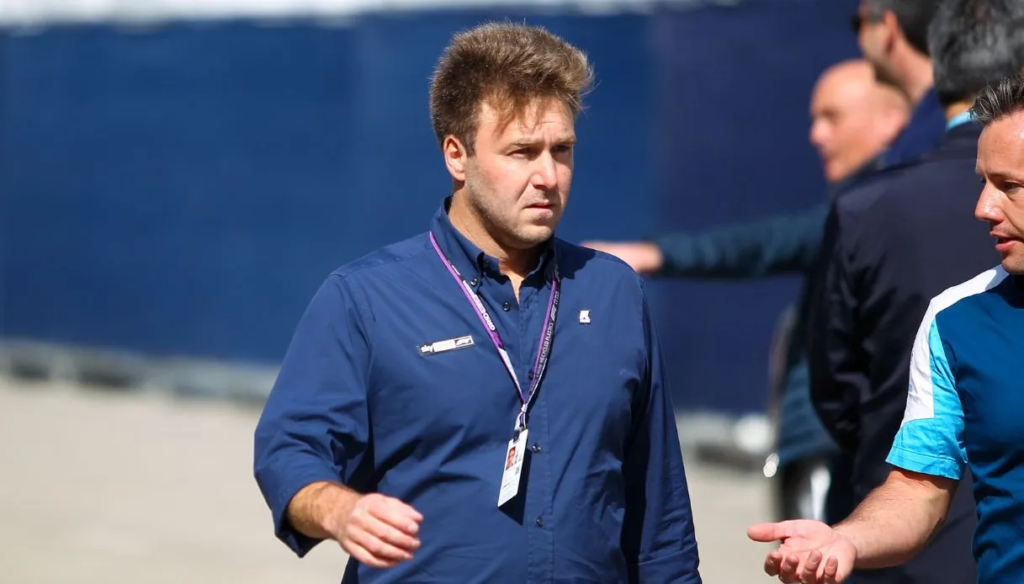
There are those who know him for having been GP2 Series World Champion or for his role as third driver for Lotus in Formula 1. Many, however, discovered and appreciated him behind the microphones of Sky Sport, where he has been covering Formula 1 with expertise, authenticity, and humor. We had the pleasure of speaking with Davide Valsecchi in Vallelunga, on the occasion of the FX Racing Weekend held on April 18–19.
Valsecchi: a 360-degree story
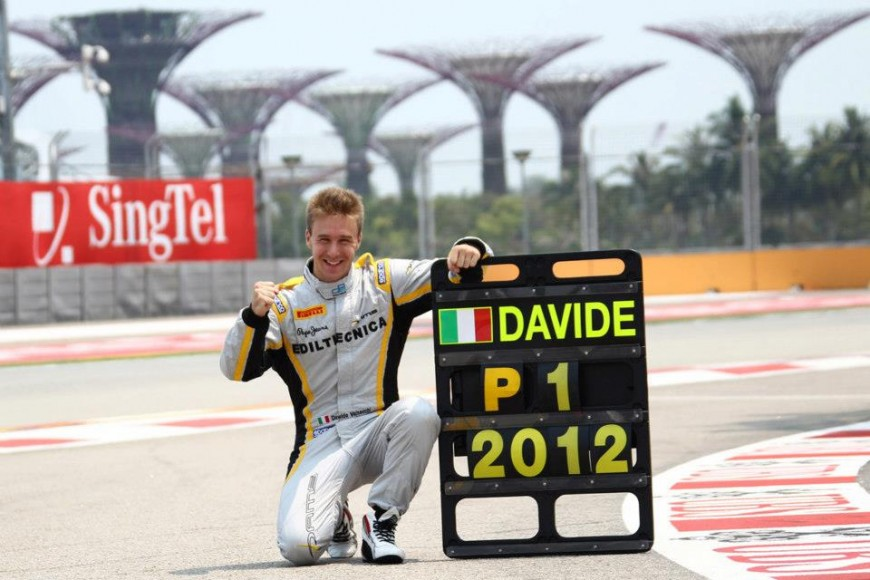
Let’s rewind Davide Valsecchi’s journey back to 2012. It is not just any year: it is the year of his triumph. Davide becomes GP2 Series World Champion in Singapore: a memory impossible to forget. However, when watching from the outside, it is often hard to realize what lies behind such success. It is not just a strong race weekend: it is about sacrifice, passion, and constant determination. A dedication that accompanied Valsecchi throughout his life, since childhood. Telling the emotions of such an important milestone — the achievement of a lifetime — is not easy. Yet Davide managed to do it.
“It was a special feeling, because we were in Singapore and right after that I went for three days to Bintan Island, a small Indonesian island nearby. And yet I couldn’t wait to come back, really. I was on holiday, but I only wanted to get back in the car: I wanted more races, more challenges. I was thinking: ‘Fuck, this is the best moment of my life. Let’s put everything back on the line and start again for another winter of battles.’
The pressure of that Monza’s weekend
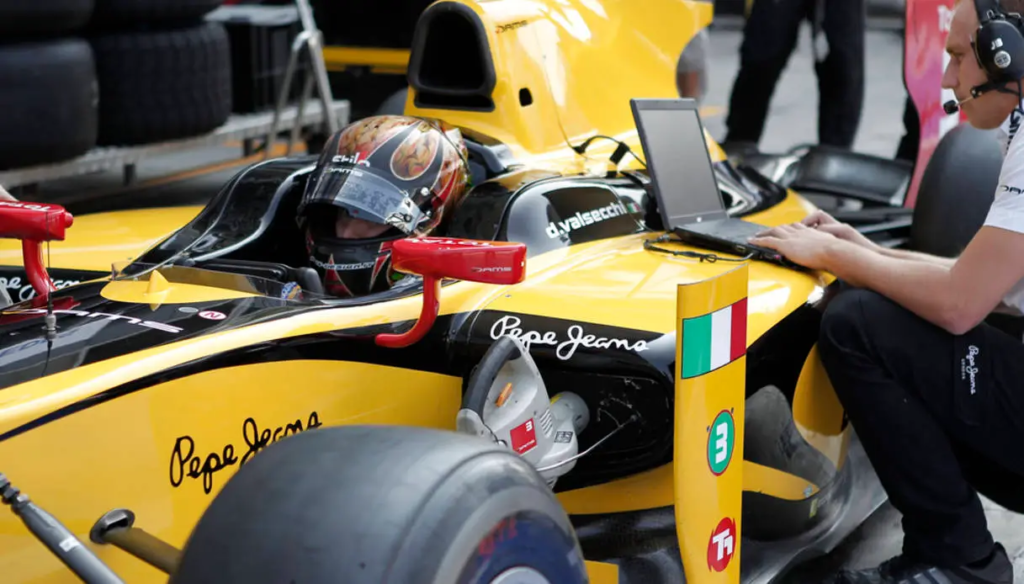
In Singapore I wasn’t even too nervous. The real nervousness I felt was at Monza, during the penultimate race weekend. It was my home race, I was close in the standings to my rival, and there I truly felt the pressure, especially in qualifying. That moment was decisive. I felt tension because I wanted to do well. I remember that in free practice I had set the third or fourth fastest time, so I was right up there. Usually, when I was that competitive in free practice, I knew it was going to be a great weekend.
But my teammate, Felipe Nasr, who later went on to Formula 1, had achieved a good result using a different wing setup than mine. So the team and my engineer told me: “Let’s change the setup, you’ll see it will be better.” We switched to his configuration, with more downforce. I went out on track, drove as I had in free practice, in the same way, but I set the thirteenth fastest time, while my rival was second or third. It was a moment of great tension, especially because qualifying was not my strong point.
At that point, my team principal, Jean-Paul Driot, who passed away in 2019, stepped in and said two simple things: “Calm down, Davide: you were ahead before, and you’ll be ahead again now. Let’s put the previous setup back on, you’ll fly.” We reverted to the earlier configuration, I went back out on track, drove in exactly the same way, and set the third or fourth fastest time, while my rival dropped back into the middle of the field. That was the most important moment of the year, and Driot, former partner of Arnoux, played a decisive role with his confidence and experience.
The difference was made by the mind
Then I performed well in the race. I won Race 2, the Sprint Race, and I also did well in Race 1. I had the pressure of family and friends watching me. I took the lead in the championship, and going into the final race, who could take it away from me? In that moment I felt like the strongest man in the world. At the time I was in incredible physical shape. I was blond, I was slim, I had a beautiful girlfriend: who could beat me? I went to Singapore four days earlier to train, running at two in the afternoon despite the heat. Mentally, I considered myself unbeatable at that moment.
That weekend I did free practice on a track I had never seen before, with rivals who had already raced there in other categories, even though it had been pouring with rain. I went into qualifying feeling calm and I won the championship. I felt much more tension at Monza. I had the confidence of being the right man in the right place in the world. I was thinking: “Damn, I’m so lucky.” I came from a small town and I found myself on the other side of the world fighting for a world title. Who gets to experience that?
I was in a sort of special mental state; I felt almost like a greek hero. I was saying: “I am one of the chosen ones, who can take this away from me?” At Monza I had built a big lead. Then in the race in Singapore I did what I had to do: finish ahead of my rival. I succeeded in both races, and that was decisive. At that moment I felt unbeatable”.
The transition as a commentator
Davide Valsecchi had achieved the dream of a lifetime, but one more remained to be pursued: racing in Formula 1. Unfortunately, also due to a lack of sponsorship, in 2013 he went no further than the role of third driver for the Lotus F1 Team. However, Davide never wanted to distance himself from that world. In the same year, he began his experience as a pundit for Sky Sport Italia, a role he would hold until 2023. In May 2024, he then joined the Formula 1 commentary team of RSI (Radiotelevisione della Svizzera Italiana), also collaborating on some occasions with Sky Sports UK. When asked whether the transition from driving to commentary was natural or whether it took time to adapt, Davide Valsecchi replies:
“It was natural, because I’ve always been someone who loves motorsport. I enjoy competitions in general involving engines. I go crazy for races, I even like motocross. So the transition was quite natural.
If you ask me about the feeling, it’s that I’ve always felt a bit like an ‘outsider’. I’ve always thought that my best quality was racing: bringing out character, lap times. The end of a race was my thing. When I then switched to commenting on them, even though I was in a good place, I still felt out of place, because I thought: ‘I wanted to be there, not here.’ That said, the job always came naturally to me, because I’ve always tried to have fun. I’ve always had fun; I didn’t care about what others thought, about managers or journalists. I’ve always tried to enjoy myself and say what I thought about the races: if people like it, good; if they don’t, so be it. That’s just how I am.
Transparency first and foremost
At times there was a tendency to tell things in a slightly better way than reality, but I never did that. I’ve always said what I thought, my truth. Then everyone sees it as they want, because there are no objective facts in that sense. But if Ferrari was performing badly, I wouldn’t say: ‘Yes, but seventh place is a positive result’ for the race. I’ve always tried to be objective, despite my support and my friendships.
It’s normal: we’re Italian. When you’re on the other side of the world covering races, you’re happy if a team with many Italian guys you know wins, or a team like Toro Rosso where there are lots of Italians and friends. You do root a little, but you still have to be serious and objective, because races must be told with honesty. And I know one thing: drivers are extremely honest with themselves. When they make a mistake, they might go out and say in front of the cameras ‘I’m the best in the world’, but then at home they say: ‘What a stupid thing I did today.’
It doesn’t matter the name, but the honesty
I remember that some fans criticized me in the year Leclerc arrived, Vettel struggled, and Leclerc beat him. I had to be critical of Vettel, even though he has always treated me very well. I was never mean; I would just say: ‘I expected much more from him.’ If you qualify thirteenth at Monza, what am I supposed to say? That it’s great? He’s a champion, and from a champion I expect him to always be at the front. Seeing him behind is disappointing, it hurts, but at that moment he wasn’t doing what was expected. And he was the first to know it. In fact, he has always treated me very well and with great respect.
I never insulted Vettel as a person; I only spoke about his performances. And as a person he is one of the funniest and most lovable guys in the paddock, I swear. Then on track he would transform, he became extremely tough with everyone, but off track he was a wonderful person. There isn’t a single Ferrari mechanic who speaks badly of him, not even his rivals. He was, and is, a great man, a great sportsman, a great athlete. You don’t win four world titles by chance. Maybe his career ended a bit early, but he was precocious in winning. He won his first world championship at 21.”
But the story continues. In the second part, we will focus on the details and exclusive moments of this everyday life between commentary and the paddock.
Read also: Exclusive Interview with Alberto Naska: discovering Italy’s most followed racing driver