
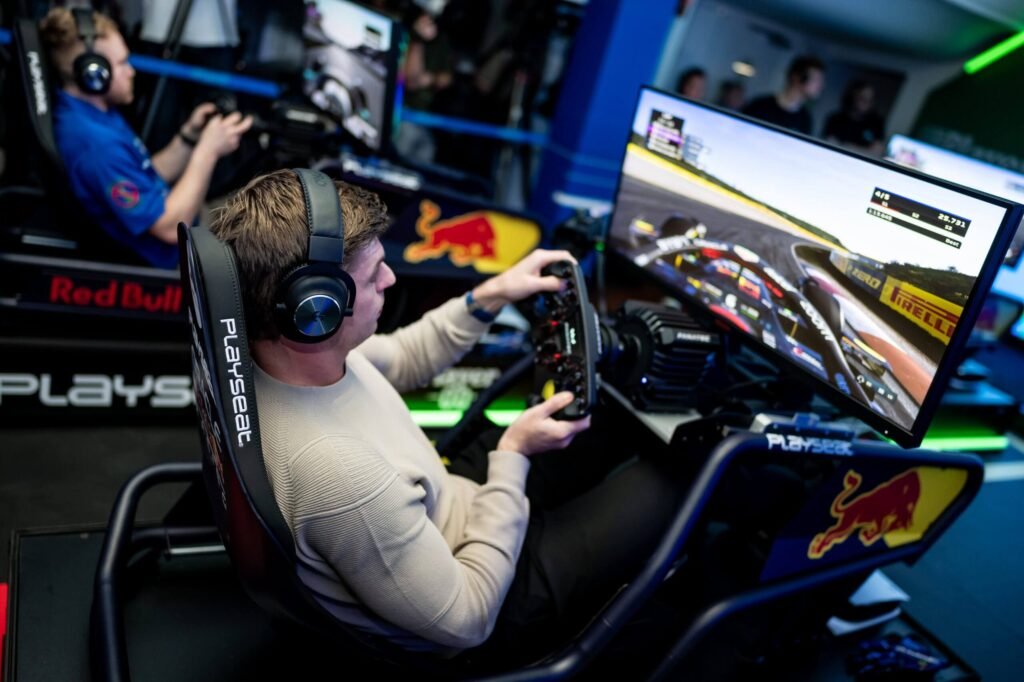
For many years it was considered a simple pastime for video game and motorsport fans. However, today sim racing has become a structured, competitive discipline that is increasingly close to real motorsport. It’s no longer just about “driving from home,” but about competing in real virtual races within highly realistic simulation ecosystems, where skill, consistency, strategy, and mental preparation matter exactly as they do on the track.
Sim racing is, in fact, a form of digital competition that uses advanced driving simulators to realistically reproduce vehicle behavior, track conditions, and race dynamics. In other words, the goal is not simply entertainment, but to offer the most realistic experience possible. For this reason, it’s also used by professional drivers as a training and skill-refinement tool. Over the last few years, the growth of the phenomenon has been enormous. Thanks to technological development, the spread of streaming platforms, and the increasing interest from teams, sponsors, and manufacturers, sim racing has carved out an increasingly relevant space in the esports landscape. As a result, today there are official championships, structured racing teams, significant prize pools, and a global audience that follows events, races, and content with the same attention reserved for many traditional sports disciplines.
An increasingly concrete bridge between video games and motorsport
What distinguishes sim racing from a simple racing game is the pursuit of realism. Cars react according to realistic parameters, tracks are often reconstructed with extreme accuracy and every detail, from tyre management to pit stop strategy, can affect the outcome of the race. For this reason, those who compete at a high level do not improvise. They study, train, test setups, and work on details with an increasingly professional approach. It’s precisely this closeness to motorsport that makes sim racing so interesting. On one hand, there is accessibility. There is no need for travel, sporting licenses, or million-dollar budgets to get started. However, on the other hand, at the highest levels the required preparation is far from “casual.” Precision, concentration, driving sensitivity, and adaptability are essential. In some cases, the difference between victory and a mistake is measured in thousandths of a second, just as in real-world racing categories.
It’s therefore not surprising that many professional drivers use simulators in their routine. Sim racing allows them to train away from real circuits, learn tracks and procedures, work on reflexes, and maintain race rhythm even during breaks. At the same time, it represents a remarkable opportunity for young talents who do not have the financial means to immediately enter traditional motorsport.
The platforms that made sim racing great
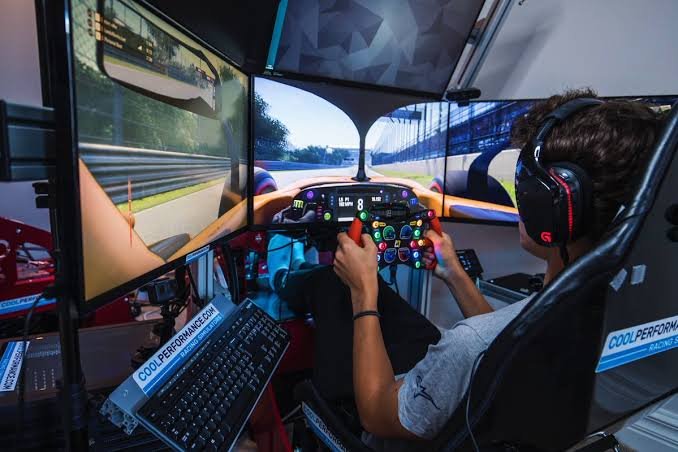
At the core of everything are the simulators, installed on PCs configured to support high performance and smooth management of physics, graphics, and peripherals. In the current landscape, there are several reference platforms, each with its own identity and community. Among the most appreciated titles is Assetto Corsa Competizione, particularly known for its visual quality and its focus on GT cars. It’s a simulator that has won a significant share of the audience thanks to its immersion and strong competitive component. Alongside it, iRacing has established itself as one of the absolute benchmarks for online experience, championship structure, and level of simulation. Also still central is rFactor2, a long-standing platform that continues to be highly appreciated for its physics model and the depth of the driving experience.
Each of these simulators has contributed to building an increasingly credible competitive environment. It’s not a case that many esports championships, both official and organized by independent leagues, are based precisely on these platforms. As the competitive level has grown, the same has happened on the organizational side as well. Today, sim racing features real teams, often structured with drivers, coaches, analysts, virtual engineers, content creators, and sponsors. In many cases, the organization increasingly resembles that of a real racing team. Some projects were founded directly by former drivers or figures close to motorsport, while others developed as independent entities capable of building a strong identity over time. Formula 1, in fact, has long understood the potential of this universe, and several real-world teams have invested in building official esports rosters to establish a presence in the sector and connect with a younger, more digital audience.
Max Verstappen and the new frontier of talent
One of the most emblematic cases of this connection is that of Max Verstappen. The Formula 1 world champion has never hidden his link with sim racing, which for him is not just a marginal hobby but a concrete part of his training and competitive mindset. In 2026, the historic Team Redline, one of the most successful organizations in the international scene, was officially relaunched under a new identity: Verstappen Sim Racing. The project is part of the broader vision of Verstappen Racing, with the aim of building an ecosystem capable of combining virtual competition and real-world racing.
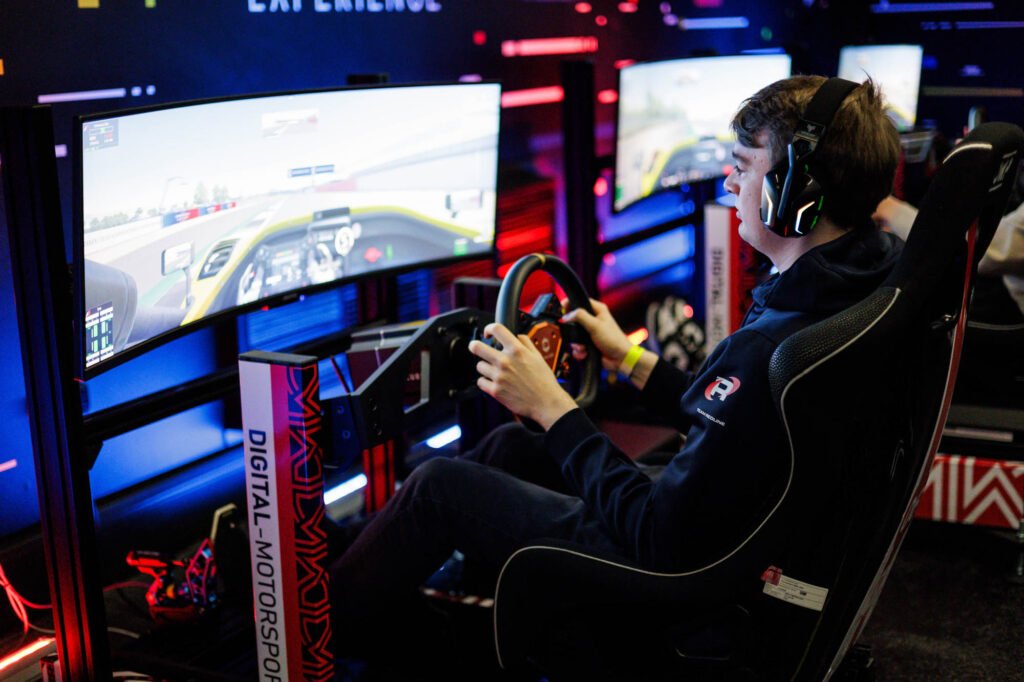
This transformation is not merely symbolic. In this model, sim racing becomes a true talent development platform. And the name that best represents this evolution is Chris Lulham. Having joined Team Redline in 2021, Lulham moved from the virtual world to GT3 competitions in 2025, being selected directly within the environment built around Verstappen. His trajectory is one of the most concrete examples of how sim racing can now serve as a credible stepping stone toward real motorsport. Here, sim racing definitively stops being perceived as a “game” and starts to be understood as a system for selection, development, and training.
The technology that makes everything possible
Of course, experiencing sim racing seriously requires more than just software. It takes a setup capable of delivering realistic sensations and precise control. In fact, hardware quality is one of the key factors that has driven the evolution of the discipline, because today the driving experience relies on increasingly sophisticated components. At the core of every configuration is the steering wheel with force feedback, the system that returns the car’s reactions to the driver by simulating grip, load, surface irregularities, and weight transfer. More specifically, the most modern bases use direct drive technology, now considered the benchmark for precision and realism, especially in competitive settings.
At the same time, pedals also play a central role. In particular, load cell brake systems allow for a much more natural and consistent braking control, bringing the virtual action closer to what is required in a real car. As a result, consistency in lap times often depends on brake sensitivity, which at a high level of sim racing makes a huge difference. In addition, to complete the experience there are cockpits, seats, dedicated frames, sequential shifters, handbrakes, quick releases, and steering wheels of different shapes, designed to adapt to various disciplines such as GT, Formula, rally, or endurance racing.
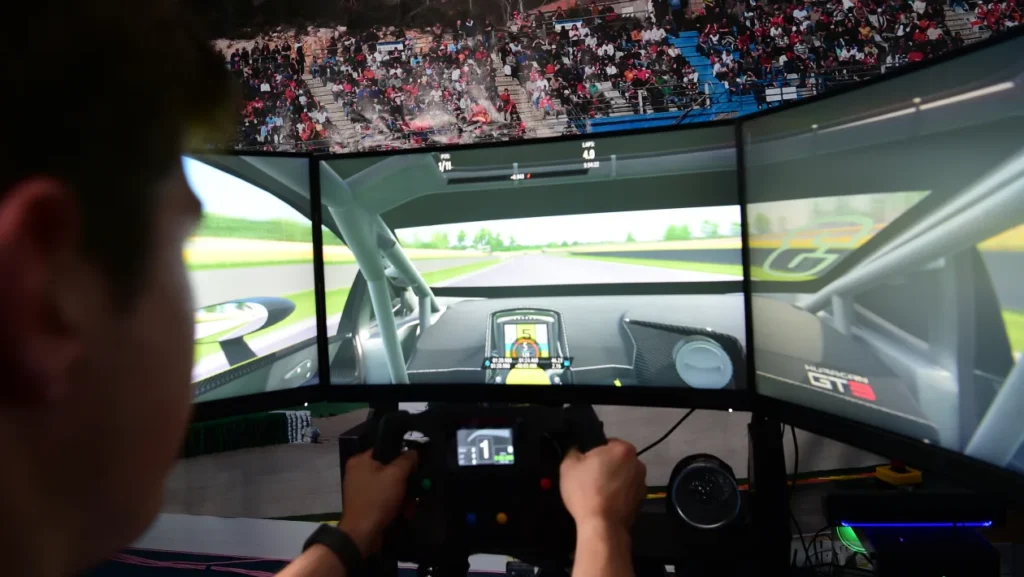
The chosen platform also has a strong impact on the experience. The PC world remains the natural home of the most advanced sim racing, as it allows greater customization, compatibility with a wider range of peripherals, and access to the most sophisticated simulators. On the other hand, consoles represent a simpler and more immediate entry point. They are ideal for those who want to get started with a less complex setup without giving up the enjoyment of virtual driving. However, when it comes to maximum competitiveness, triple-screen setups, technical customization, and high-end equipment, the PC is still the reference platform today.
A movement coming of age
Sim racing is no longer a marginal phenomenon within motorsport, but an increasingly recognized and competitive extension of it. From official esports championships to professional teams, from simulation platforms to the evolution of hardware. Everything points to a rapidly expanding sector capable of attracting audiences, sponsors, and new talent. It allows anyone, at least in theory, to enter a global paddock starting from a room, a steering wheel, and an internet connection. But from that point on, as in any real sport, what makes the difference remains the same: speed, mindset, consistency, and the ability to perform under pressure.