
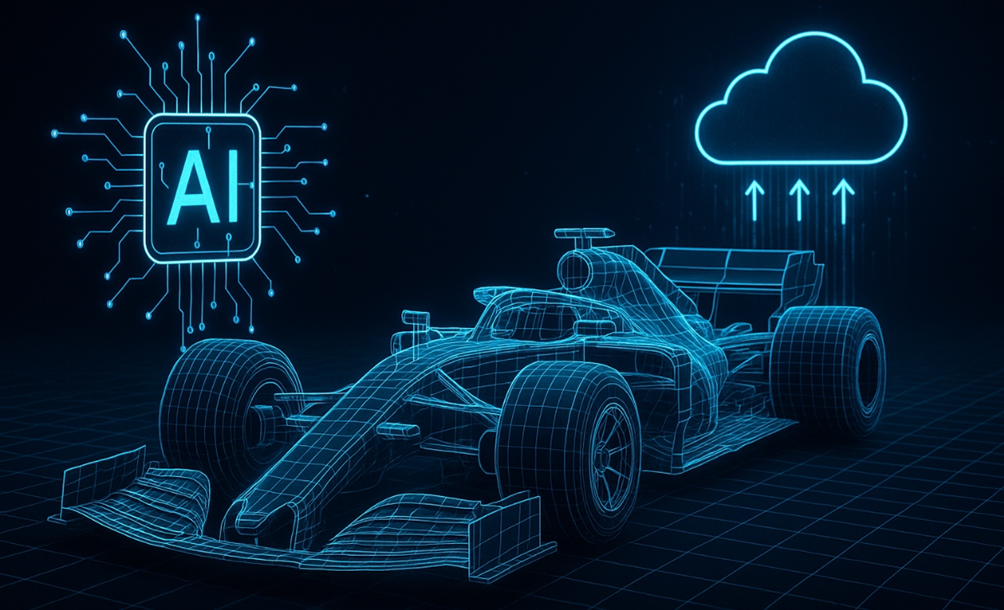
There was a time, not so long ago, when speaking of motorsport, technology mainly brought to mind engines, aerodynamics, materials, and car development. Today, adding just two words to that list completely shifts the perspective: artificial intelligence.
It’s no longer just a subject for science fiction films or a technology meant to change how we use phones and computers. AI has now entered our daily lives, establishing itself in the world of motor racing as well, and we are likely only at the beginning of a process destined to become increasingly significant.
The question, however, should not simply be “how much is artificial intelligence used in motorsport?”, but how deeply it can change the way we race, design a car, and even perceive competition itself.
From track to data
Modern motorsport is increasingly a massive collection of data: every lap tells a story through temperatures, tyres, speeds, braking, acceleration, consumption, and car behaviour, all the way down to track conditions. Behind those few minutes we see on television lies an enormous amount of information that engineers and technicians must interpret to understand what is truly happening.
It is precisely at this juncture that artificial intelligence can make the difference: a human being can analyse data, compare it, and identify specific trends, but an AI system can do so across a vastly greater volume of information and far more quickly. This does not mean the machine has suddenly learned to “understand” a race better than an engineer, but rather that it can become a powerful tool for those who must make critical decisions in very little time.
And this is perhaps the most compelling point: artificial intelligence does not necessarily have to replace anyone to be revolutionary. It is enough that it allows even a single person to work better.
Strategy: an increasingly evident impact
Consider, for example, a Formula 1 race.
A pit stop can completely alter the outcome of a sunday. Stopping a lap too early can mean losing positions, while waiting too long can compromise the tyres. Then there is traffic, safety cars, the weather, competitors’ strategies, and an endless series of unpredictable variables that can shape, for better or worse, the final result for both driver and team.
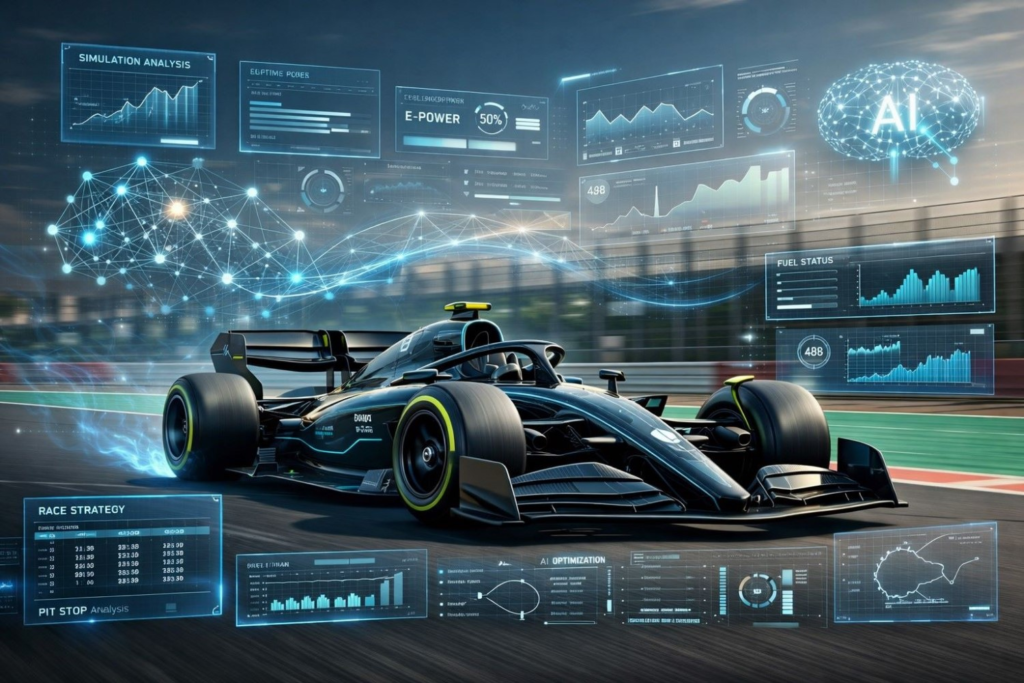
Traditionally, strategists are the ones who piece all these elements together, with artificial intelligence serving as an additional layer of support. Simulating different scenarios, comparing past situations, identifying patterns, and rapidly outlining a range of possible outcomes.
This does not mean simply pressing a button and letting an algorithm decide the race. AI can highlight which scenario appears statistically most favourable, but the engineer must still determine whether, in that specific situation, it can truly prove to be the winning one. And that is fundamental, because a race is not, and never will be, a perfect equation.
The Problem of Unpredictability
Motorsport thrives on the very things that cannot be entirely predicted: a driver can make a mistake, a rival might switch strategies, rain may begin to fall, a safety car can be deployed, a tire might behave differently than in simulations, or a car can suddenly lose performance. No matter how sophisticated an artificial intelligence system may be, an element of unpredictability will always exist. And this is where human experience comes into play.
An engineer doesn’t just look at a number: they know the car, the driver, the circuit, and, above all, the context in which that data was produced. The driver, on the other hand, directly feels what is happening beneath them. They can sense that something isn’t working even before the numbers show it: an intuition that is difficult to translate into an algorithm.
However, artificial intelligence isn’t just about the race. One of the most fascinating aspects involves car development. Motorsport has always been a relentless search for detail: finding a marginal aerodynamic gain, improving a component, reducing a specific type of drag, or making an existing solution more efficient.
What AI Will Never Be Able to Replace
When working on a race car, even a seemingly minuscule improvement can carry immense value.
AI can assist in uncovering these very opportunities by analyzing vast amounts of data and contributing to simulations. In the future, it could become increasingly vital in car design and optimization as well. This leads to an almost inevitable outcome: human talent does not disappear: it evolves. The engineer of the future may be less of someone tasked with crunching every single data point, and more of a professional skilled at correctly interpreting what an advanced system presents.
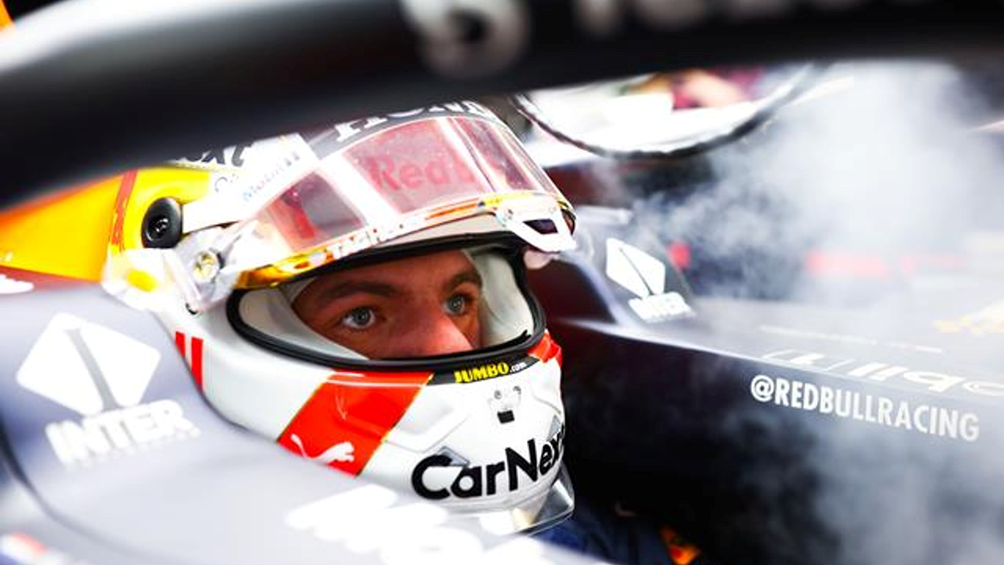
And what about the driver? We can accept an algorithm helping a team design a component or devise a strategy. But when we turn to the driver, the conversation changes entirely. Motorsport is, above all, emotion, instinct, and courage. A driver isn’t simply someone who gets a car across the finish line in the shortest possible time: they must adapt, improvise, handle pressure, and read the race unfolding around them, absorbing a massive amount of information from the pit wall in mere seconds, yet ultimately being the one who has to hit the brakes into the next corner.
Much of the appeal of racing stems precisely from the fact that, in the end, there is a human being inside that car.
The Line We Will Have to Draw
The real issue, then, may become one of regulation.
As AI continues to evolve, the various racing categories will inevitably have to consider how much space to grant it. Which tools will be permitted? Which will have to be restricted? Where does technological assistance end and the automation of competition begin?
These questions may seem premature today, but motorsport has shown time and again just how quickly technology can shift the competitive balance. And there is another question: if everyone has access to the same tools, will it once again be the human element that makes the difference?
The answer is likely yes. We cannot be entirely certain, but we must remember that, in the end, behind the finest feats of engineering and the most cutting-edge technology, there will always be the women and men who, when lowering their visors before the lights go out, will be the ones making the difference to write their own story.
Read also: Cars turns 20: Lightning McQueen, the first icon who made us fall in love with racing